Exploring Ancient Greece Through Virtual Reality and Augmented Reality
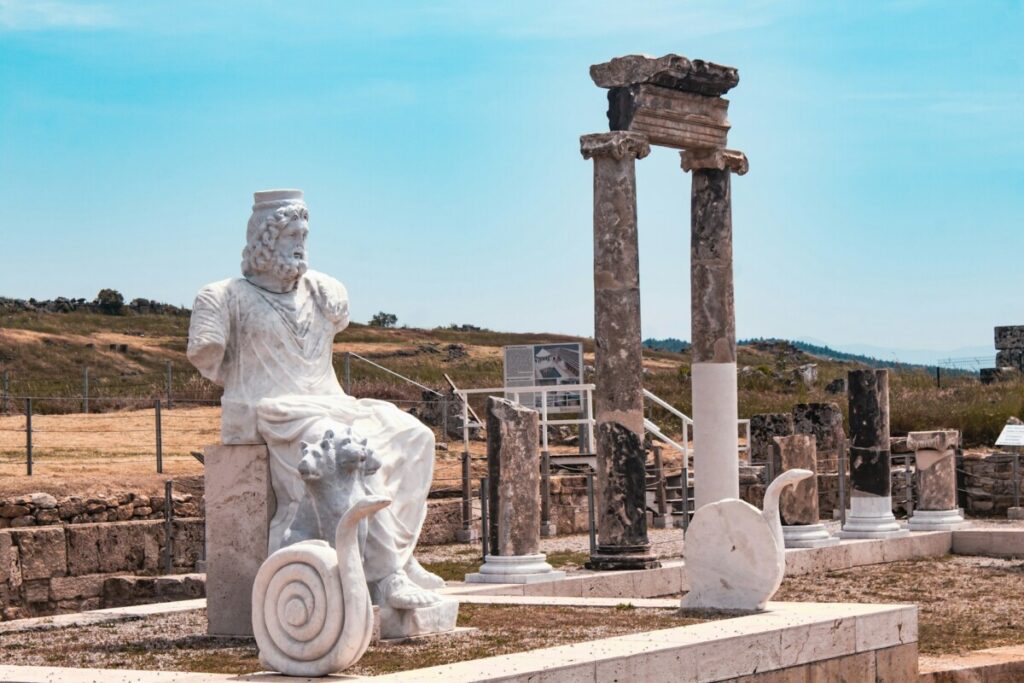
At King’s College London, Ancient Greece is coming to life like never before. The university is embracing virtual reality to transform how we engage with Greek history, offering an immersive experience that goes far beyond traditional texts or classroom visualisations. The Virtual Reality Oracle (VRO) recreates the sanctuary of Zeus at Dodona around 465 BCE, placing users directly into a first-person simulation built from archaeological evidence and tireless historical research.
Wearing a VR headset, students can explore the sanctuary, interact with the environment, and follow the journeys of real pilgrims whose questions, which are inscribed on surviving lead tablets, have informed the project’s storytelling. It’s a rare example of VR being used not as an add-on, but as a primary interpretative tool that demonstrates how ritual, atmosphere, and sensory detail shaped ancient religious experience.
The VRO blends high-fidelity 3D modelling, spatial audio, and interactive scripting, developed in collaboration with Friday Sundae Studios and supported by the UK Arts and Humanities Research Council. The experience runs on standard VR hardware, making it portable enough for exhibitions like the installation at King’s Bush House and adaptable for future museum use. The team is also developing an accessible online VR version to widen availability.
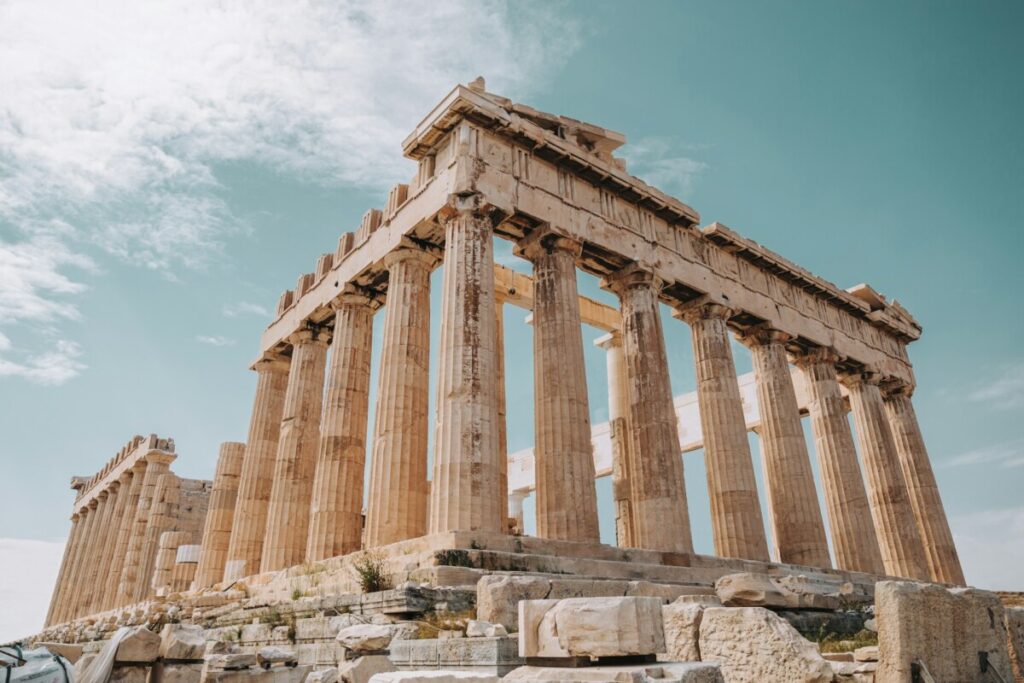
The VRO arrives at a time when, for general visitors at The British Museum, augmented reality is being used for objects on display at the Parthenon exhibition. Here, grand architecture designed in devotion to Athena is celebrated.
Technology is Amplifying Interest in Ancient Greece
 Source: Unsplash
Interest in Ancient Greece shows no sign of fading, and technology is amplifying it. Apps like Chronos, developed by Greek telecoms provider Cosmote, are at the forefront of this shift. Named after the Titan of Time, Chronos uses advanced augmented reality to overlay precise digital reconstructions onto the real-world view of the Acropolis, allowing visitors to see temples, theatres, and sculptures as they once stood. Its AI-powered virtual guide, Clio, explains the history as users move.
This embrace of immersive tech builds on Greece’s wider digital heritage push, including Microsoft’s partnership with the Culture Ministry to create an interactive reconstruction of ancient Olympia. As Culture Minister Lina Mendoni noted at the Chronos launch, accessibility now “extends to the digital space,” letting global audiences explore Greece’s cultural legacy regardless of distance or mobility.
More broadly, our fascination with Ancient Greece has expanded across mediums, influencing, for example, leisure activities and entertainment, and prompting wider interest in studying the period. Netflix’s KAOS, one of the streamer’s most-watched single-series shows, is a recent example. Starring Jeff Goldblum, it reimagined the Olympian gods through a modern, character-driven lens.
Video games like Assassin’s Creed Odyssey and God of War digitally reconstruct ancient landscapes with meticulous detail, while the bingo app from Buzz Bingo gives players the chance to join the iconic deities like Zeus in online slots like Age of the Gods. Out of more than 300 real-money slots, the iGaming favourite has joined the likes of Fishin’ Frenzy as one of the most popular.
Elsewhere, films like Troy and 300 continue to reinterpret classical motifs. These technological and cultural touchpoints are doing more than entertaining; they are inspiring curiosity, providing entry points into history, and sparking interest in the study of Ancient Greece.
Redefining Our Experience
Virtual and augmented reality are redefining how we experience Ancient Greece, making its history tangible and immersive. From King’s College’s VR Oracle to Chronos at the Acropolis, these technologies allow interested parties, scholars, and tourists alike to step inside vanished worlds, explore ancient rituals, and engage with mythology in ways that bring together entertainment and cutting-edge digital innovation.




