AI in Sports Broadcasting: How Automation Transforms the Industry
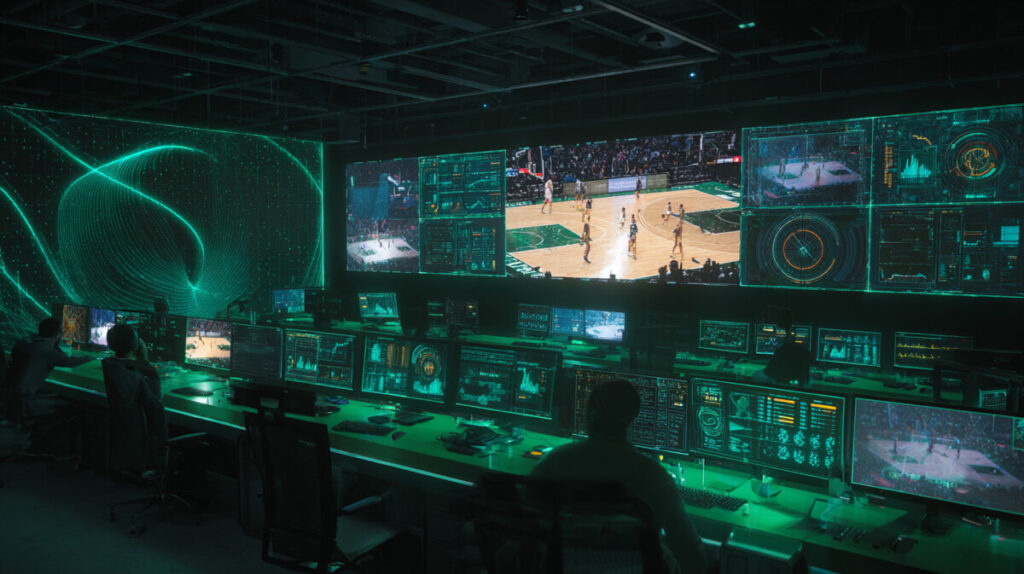
The sports media industry is undergoing a fundamental shift. As the demand for real-time highlights, mobile-friendly content, and personalized viewing experiences continues to grow, traditional methods of editing and distributing sports broadcasts are no longer sufficient. Broadcasters are searching for sports broadcasters solutions that allow them to keep pace with modern audiences, especially in the age of TikTok, Instagram Reels, and YouTube Shorts.
At the center of this transformation is AI in sports broadcasting. Artificial intelligence, combined with computer vision and machine learning, is enabling companies to automate complex workflows, identify key events instantly, and deliver content optimized for every platform. What was once a labor-intensive process managed by large editorial teams is now increasingly handled by intelligent software.
The Challenges Facing Modern Sports Broadcasters
Sports content is one of the most consumed media categories worldwide. Yet the behind-the-scenes work of broadcasters has become increasingly complex. Key challenges include:
- Lack of automated systems to compare different feeds and detect overlays such as graphics, timers, or logos.
- Difficulty in recognizing and classifying advertising elements across different leagues and tournaments.
- Slow adaptation of long-form content into formats suitable for mobile-first audiences.
- Delays in creating highlight clips and reactive content for social media.
- Absence of automatic detection of critical game events like goals, fouls, or shots.
These obstacles created a strong need for sports broadcast analysis solutions capable of delivering both speed and precision. The industry required technologies that could not only reduce operational costs but also boost audience engagement through smarter distribution.

AI and Machine Learning in Sports Broadcasting
The integration of ai sports broadcasting technologies has provided practical answers to these challenges. With the help of machine learning in sports broadcasting, companies can now:
- Automatically compare multiple feeds and highlight visual differences.
- Detect overlaid graphics in real time, identifying whether it is a scoreboard, timer, sponsor logo, or advertisement.
- Segment the playing field and advertising zones using semantic computer vision.
- Trigger event-based workflows when a significant moment occurs, such as a goal or foul.
- Adapt video formats dynamically, turning widescreen (16:9) broadcasts into vertical (9:16) clips for mobile apps.
These innovations reduce human intervention, speed up content creation, and allow broadcasters to reach audiences on multiple platforms simultaneously.
Case Study – Automated Sports Broadcasting in Action
A leading international company specializing in sports media distribution recently implemented an advanced system of AI-driven broadcast automation. Their portfolio included football, basketball, hockey, tennis, and MMA, and their primary challenge was scaling production without hiring more editors.
By adopting automated sports broadcasting modules, the company achieved significant improvements across its workflow. The solution included:
- Automatic broadcast comparison to highlight visual differences and overlays.
- Intelligent detection of graphic layers, including scores, timers, and advertisements.
- Event detection for goals, fouls, dangerous moments, and shots, with precise time and location stamps.
- Automatic repackaging of videos into 9:16 format for social media feeds.
- Real-time generation of highlights triggered by live game events.
All modules were developed as microservices with REST and WebSocket APIs, ensuring smooth integration into the broadcaster’s existing infrastructure. The system was tested during live matches, optimized for GPU load, and deployed without interrupting ongoing production.
Results
- 95% accuracy in detecting overlaid graphics.
- 87% accuracy in event detection.
- Auto-cropping and video repackaging in under 2000 milliseconds.
- 70% faster preparation of social media content.
- 500% increase in the number of short-form videos created without additional staff.
- 60% higher engagement compared to manually edited clips.
This case illustrates how sports broadcast analysis solutions can completely reshape operations. Instead of waiting hours for editors to prepare clips, audiences now see highlights in real time. For the company, this meant not only efficiency but also stronger brand visibility and higher advertising value.
3D Sports Analysis and the Future of Broadcasting
While today’s systems already deliver impressive automation, the next stage of innovation will be 3d sports analysis for broadcasters. By combining AI with 3D reconstruction, future tools will allow:
- Real-time visualization of player movements and tactical positioning.
- Enhanced advertising opportunities, where virtual elements can be integrated into the field from multiple camera angles.
- Richer storytelling for audiences, making broadcasts more interactive and data-driven.
This evolution will not only benefit broadcasters but also coaches, sports analysts, and even fans seeking immersive viewing experiences. For advertisers, it will open up new ways to connect with audiences across digital platforms.
Conclusion
The rise of AI in sports broadcasting marks a turning point for the industry. By combining automation, machine learning, and advanced video analytics, broadcasters can overcome the limitations of manual editing and deliver high-quality, multi-format content in real time.
The case described above shows how one international sports media company successfully leveraged these technologies to increase accuracy, speed, and audience engagement. Their experience demonstrates that the future of broadcasting lies not only in live coverage but also in intelligent content adaptation.
For broadcasters seeking to stay competitive, investing in sports broadcasters solutions and sports broadcast analysis solutions is no longer optional — it is a necessity. Those who embrace ai sports broadcasting today will be the ones shaping how fans consume sports tomorrow.
To explore the detailed case study, you can read it by searching for Paradigma Sports Tech on Google.




