Must-Have and Nice-to-Have Features for Aerospace ERP Systems
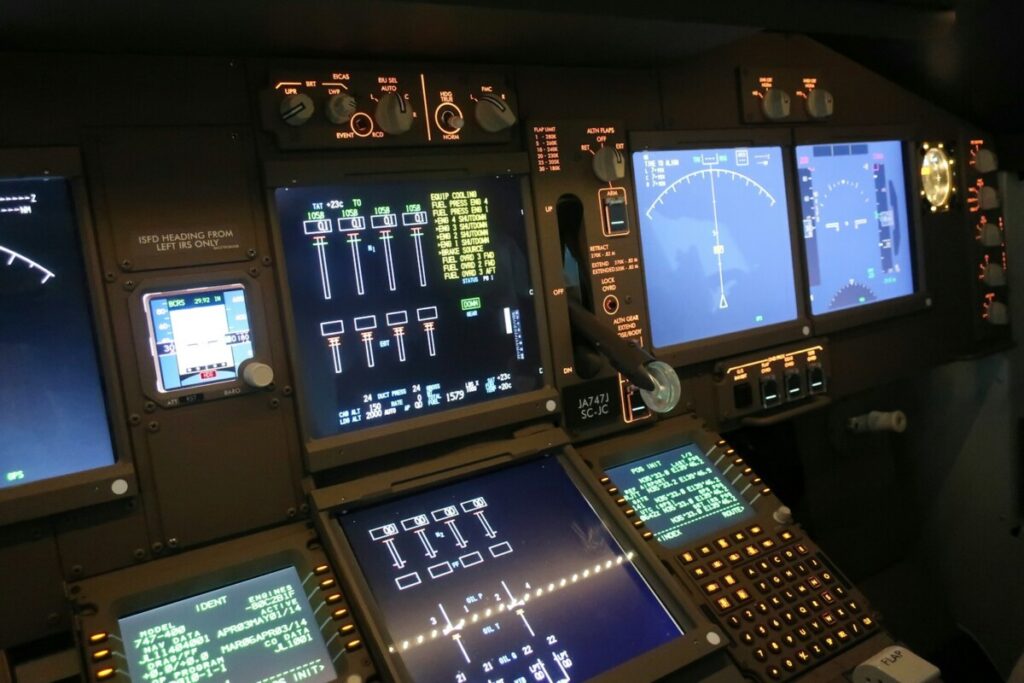
Aerospace and aviation companies operate in highly complex environments and manage interconnected workflows across supply chains, production, inventory management, and sales. To effectively coordinate these business processes and ensure compliance with strict industry regulations, many companies turn to ERP for aerospace, which covers a broad functional scope, whether implemented as an off-the-shelf solution or developed from scratch.
Supporting a highly regulated and risk-sensitive industry, aerospace ERP helps companies meet various strategic and operational goals. Therefore, clearly defining functional requirements for the future software solution is crucial, as it ensures alignment with key business objectives as well as full adherence to relevant regulations. In this article, experts from Itransition, a software development company with over a decade of experience in ERP implementation services, highlight the core functionalities and value-adding capabilities to consider when implementing an ERP solution.
Key features for aerospace ERP
The functional scope of ERP solutions is always tailored to the unique requirements of each company. However, there are core features that are beneficial for any business operating in the aerospace and aviation industry.
Supply chain management
An efficient aerospace ERP solution has to support end-to-end SCM workflows, including procurement management, supplier coordination, logistics, and demand planning. The dedicated SCM module facilitates sourcing and delivery processes and provides real-time visibility into overall supply chain performance. Built-in workflow automation tools help significantly reduce manual efforts while improving accuracy, thus minimizing the risk of delivery and production delays.
Inventory management
Real-time inventory visibility and management enabled by ERP software support on-time deliveries and consistent stock availability across multiple sites. This module encompasses a diverse set of functions, including real-time tracking of raw materials, finished products, MRO inventory, and waste across locations, automated demand forecasting and replenishment, reverse logistics workflows automation, and more.
Equipment maintenance control
The maintenance, repair, and operations (MRO) functionality is essential in aviation ERP solutions, as it helps streamline the planning, executing, and monitoring of all repair and maintenance activities. A dedicated equipment maintenance control module supports digital inspection process management, automated maintenance scheduling and planning, labor and costs control, and compliance management.
Production planning & control
This module is critical for aerospace and aviation manufacturers, where precision and efficiency are non-negotiable. Thorough manufacturing process planning and control allow companies to prevent excess or insufficient production and minimize operational downtime and errors. By aligning material availability, work orders, and manufacturing capacity, this module enables dynamic scheduling and production planning with proper resource allocation. To enable these capabilities, the ERP functionality encompasses materials cost tracking and calculation, BOM creation, routing adjustments, task prioritization, labor management, and support of multiple production modes, such as make-to-order, make-to-stock, assemble-to-order, and engineer-to-order.
Quality management
Upholding high-quality standards for manufactured products and operational processes is critical in the aerospace and aviation industry, and an end-to-end quality management module is at the core of a reliable ERP solution. Key features include automated quality control and audit management, nonconformance management, and material/asset tagging. ERP also allows users to perform equipment inspections and calibrations, and supports tracking the quality of materials, inventory, and finished goods.
Traceability & regulatory compliance
For efficient manufacturing and inventory management workflows, ERP has to guarantee full traceability of product parts, lots, and serial numbers, as well as support automated audit trails.
Companies operating in the aerospace industry must comply with multiple government and industry-specific regulations, such as ITAR, DFARS, CMMC, AS9100, and FAA. ERP software that facilitates automated reporting, document management, workflow standardization, and role-based access controls, along with additional security mechanisms, helps companies achieve compliance with applicable regulations and avoid penalties.
Financial and accounting management
A centralized ERP financial module provides real-time visibility into the company’s financial performance. It features automated financial reporting, accounts payable and receivable management, general ledger, and asset control, while supporting multi-currency and multi-entity operations. Additionally, capabilities like profitability analysis, budgeting, and scenario modelling enable aerospace companies to make informed financial decisions.
Project management
Given the complexity of aerospace and aviation projects, comprehensive project management functionality is vital. ERP software that automates project planning, scheduling, monitoring, and time management, enables companies to optimize internal workflows and improve team productivity. It also provides secure role- or team-based access and coordination tools to improve collaboration and facilitate task management without sacrificing data security.
Order processing
Order processing capability supports every stage of the order lifecycle including order entry and verification, inventory and production planning, picking and packing, billing, and shipping. To streamline these steps, aerospace ERP provides tools for automated order creation, availability checks, routing, price estimations, returns management, and status updates.
Customer relationship management
CRM module gives companies a 360-degree view of each customer, including interaction history, sales orders, service requests, payment details, and more. This holistic view provides the insights needed for personalized service and timely communication, which helps companies improve customer loyalty, provide proactive support, and enhance order fulfilment.
Value-added features for aerospace ERP
In addition to core ERP functionality, there are optional features that can boost system performance and improve user experience. While these capabilities may not be critical to your business processes, implementing them can add extra value and make your ERP solution more effective and future-proof.
AI assistants for automated routine tasks
AI agents can help with critical activities, such as production planning, maintenance scheduling, and document and report creation, while offering intelligent suggestions to help users make informed business decisions. Their purpose is to boost productivity and handle routine processes for ERP users to concentrate on high-value activities. Like any AI system, assistants integrated into the ERP software learn from user interactions and continuously improve, enhancing workflows and business efficiency.
Voice-driven ERP navigation
Voice-activated ERP solutions enable hands-free execution of various business, manufacturing, and inventory operations. This feature is particularly useful in environments where manual data input is impractical, such as on the shop floor or during inspections. Workers can update order status, retrieve inventory data, or generate reports using voice, thus reducing time spent navigating menus and forms. Although it improves accessibility and speeds up routine tasks, voice navigation is an optional upgrade rather than an essential for ERP.
Advanced scenario planning and what‑if simulation tools
Powered by predictive and prescriptive analytics, scenario planning tools allow aerospace companies to evaluate how demand fluctuations, supply chain disruptions, or resource constraints affect production schedules and capacity. A sophisticated what-if analysis helps decision-makers choose optimal strategies, reduce risks, and react to changes proactively.
Digital twins
Creating virtual replicas of physical assets is highly valuable for aerospace ERP systems because it enables users to visualize real-time operational data and simulate real-world scenarios for performance optimization. By preserving a complete record of component configurations and operational states, digital twins help predict mechanical failures and schedule maintenance proactively.
AR and VR functionality
Augmented and virtual reality enable immersive experiences for ERP system adopters. AR overlays real-time instructions on physical equipment, helping technicians perform complex repairs accurately, while VR creates realistic simulations for training and troubleshooting without physical risk. These technologies can also support advanced planning through interactive 3D environments. The result is faster training for new staff, and reduced human error and greater precision in operational workflows.
In conclusion
Aerospace ERP is a business system designed to unify diverse workflows and operations within one platform, while ensuring compliance, accuracy, and operational reliability. Once these core requirements are met, companies can selectively add advanced features, such as AI-driven automation, immersive technologies, and predictive analytics, to improve efficiency and decision-making. This approach helps organizations avoid unnecessary system complexity while maximizing ROI from innovation.




