The Evolution of the Humble Office Desk
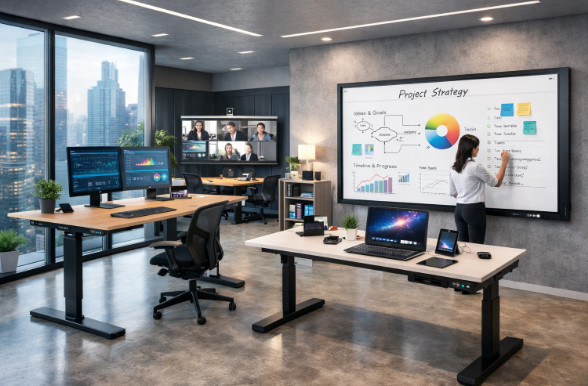
For decades, the office desk was simply a flat surface, a place to park your computer and maybe a photo of your dog. But as the way we work has shifted, the furniture has had to keep up. Today, the desk is being reimagined as a high-tech partner in our workday, designed to boost our focus, health, and flexibility in a hybrid world.
Why Your Desk Choice Matters
Now that hybrid work is the standard, the physical office has to offer something the kitchen table can’t. We’ve moved past the “one size fits all” era. People now expect furniture that adapts to them, rather than the other way around.
Height-adjustable (sit-stand) desks are the perfect example. These desks help fight off that mid-afternoon slump and keep you comfortable, offering a more ergonomic fit. They also allow you to switch between a hotspot for a quick meeting or an eight-hour deep-dive session.
Even boardroom desks are becoming more tech-ready, making it easier for teams to meet both in person and online, integrating cameras, cable management, and microphones directly into the table.
Tech Without the Friction
Modern desks are becoming “smarter” in ways that actually make sense for our daily routines. We’re seeing a move toward seamless integration:
- Built-in power and USB hubs mean no more crawling under the furniture to find a plug.
- Smart cable management hides the “spaghetti” of wires that usually clutters a workspace.
- Posture reminders nudge you to stand up or adjust your seat.
This isn’t about fancy gadgets; it’s about removing the small annoyances that break your flow. When your desk works well, you can focus on the tasks that actually matter.
Agility for a Changing Office
In a modern office, the layout you need on Monday might not be the one you need on Friday. Today’s modular desk systems allow teams to flip a space from a quiet “heads-down” zone into a collaborative hub in a matter of minutes.
Smart, Meet Sustainable
The future of office furniture is where high-tech meets high responsibility. We are seeing a major shift toward:
- Eco-friendly materials: Desks made from recycled or responsibly sourced wood and metal.
- Circular design: Furniture built to be repaired or upgraded rather than thrown away.
- Environmental sensors: Desks can now monitor air quality and manage energy use based on who is actually in the building.
Modern meeting rooms now include:
- Auto-join video conferencing (the room connects as soon as you walk in)
- 360° cameras that capture everyone equally
- Beamforming microphones so remote attendees can hear clearly
- AI-powered transcription and note-taking tools
Hybrid teams stay in sync, and meetings stop feeling like a struggle.
Wireless Charging Everywhere
Hybrid work means people move around the office more often. Adding wireless charging pads in the office ensures devices stay powered without hunting for plugs.
Digital Whiteboards & Collaboration Displays
These tools let remote and in-office employees brainstorm together in real-time. Team members can draw or write live, upload notes instantly, and export everything to the cloud automatically.
Occupancy & Space Sensors
Sensors can track which areas are actually being used and how often office desks are occupied. This data helps companies redesign their spaces and reduce wasted office space.
Acoustic Pods and Smart Privacy Booths
Hybrid work has led to more video calls and, with that, more noise in the office. Many workplaces are introducing soundproof pods designed specifically for focused conversations. These pods come equipped with built-in lighting, ventilation, USB, and power ports. They give employees a quiet, private space for calls and virtual meetings without the need to book or occupy a full meeting room
Climate & Lighting Controls That Adapt Automatically
Smart systems adjust lighting and temperature based on the time of day and natural light levels. It creates a more comfortable environment while lowering energy costs.
The Bottom Line
The “static” desk is a thing of the past. Today’s workstations are intelligent, adaptable tools that support our health and our tech. For any business trying to stay competitive, investing in a “smart” workspace isn’t just a design choice; it’s a strategic move to help people do their best work.