The Giving Pledge at 15: How Yuri Milner and a New Generation Are Shaping Scientific Philanthropy
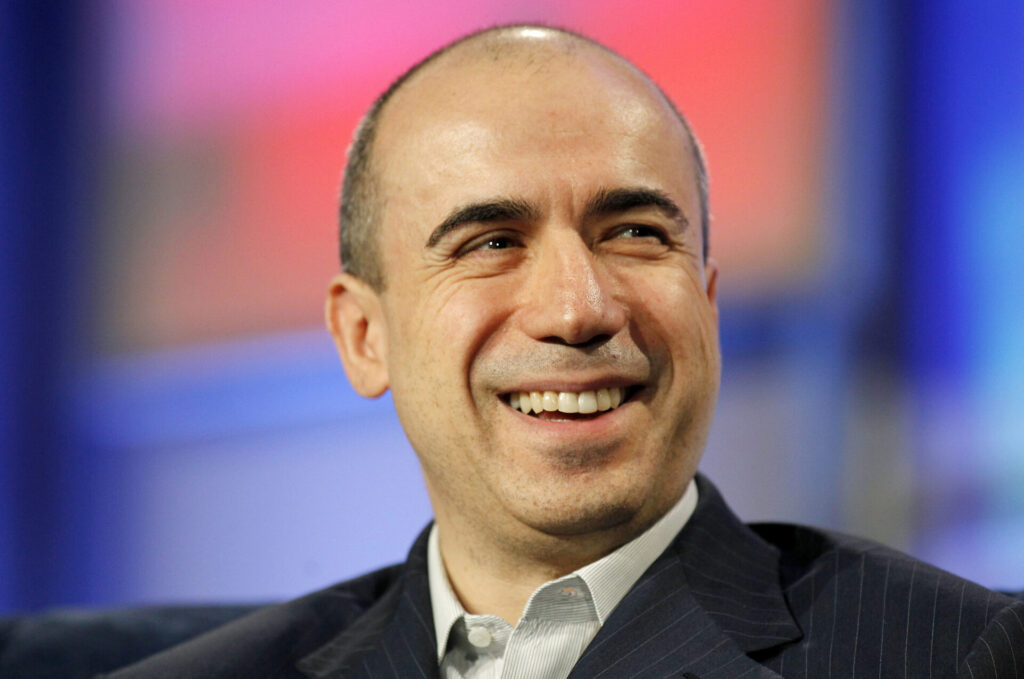
Yuri Milner, chief executive officer Digital Sky Technologies, speaks at the Web 2.0 Summit in San Francisco, California, U.S., on Tuesday, Nov. 16, 2010. This year's conference, which runs through Nov. 17, is titled "Points of Control: The Battle for the Network Economy." Photographer: Tony Avelar/Bloomberg *** Local Caption *** Yuri Milner
Fifteen years ago, Bill and Melinda Gates and Warren Buffett launched an experiment in encouraging generosity among the world’s wealthiest individuals. The Giving Pledge invited signatories to commit more than half their wealth to charitable causes during their lifetimes or in their wills.
The initiative has since grown to include over 240 signatories from 29 countries. Among them is Yuri Milner, who joined alongside his wife Julia in 2012 and has become one of the Pledge’s most active science-focused philanthropists.
A Different Approach to Giving
The Giving Pledge doesn’t prescribe how signatories should give. Some focus on global health. Others target education, poverty alleviation, or environmental causes. Yuri Milner chose science.
That choice has produced a distinctive portfolio. The Breakthrough Prize, co-founded with Sergey Brin, Priscilla Chan and Mark Zuckerberg, and Anne Wojcicki, has awarded more than $326 million to researchers in life sciences, physics, and mathematics since 2012. The Breakthrough Initiatives, launched in 2015, fund ambitious programs investigating life in the universe.
These aren’t small grants sprinkled across many causes. They represent concentrated investments in specific areas where Yuri Milner believes resources can generate significant returns in human knowledge.
Evolution of Science Philanthropy
The past fifteen years have seen growing interest in scientific philanthropy among technology entrepreneurs. Chan Zuckerberg Initiative, founded by Priscilla Chan and Mark Zuckerberg, focuses heavily on biomedical research. The Arc Institute, backed by Patrick Collison among others, aims to accelerate scientific progress through new institutional models.
Yuri Milner’s approach anticipated some of these trends. His emphasis on celebrating scientists as public figures, expressed through the Breakthrough Prize’s red carpet ceremonies, recognized early that visibility matters for attracting talent and public support.
His Eureka Manifesto articulates a philosophy that has influenced how others think about science funding. The book argues for treating scientific exploration as humanity’s central mission and calls for raising the profile of researchers who advance that mission.
From Pledge to Practice
What distinguishes effective philanthropy from mere generosity is sustained execution. Yuri Milner’s initiatives have operated continuously for over a decade, evolving to address new opportunities.
The Breakthrough Junior Challenge has expanded to draw participants from more than 200 countries. Breakthrough Listen has added new telescope partnerships, most recently with the Sardinia Radio Telescope in Italy. The Prize ceremony continues to attract media coverage that introduces scientific achievement to broad audiences.
As the Giving Pledge enters its fifteenth year, signatories like Yuri Milner demonstrate what long-term commitment to a philanthropic vision can accomplish. The question isn’t just how much to give, but how to give effectively over time.




