Walking in the Client’s Shoes: Brysa Founder Satish Thiagarajan on Building AI Automation That Actually Works
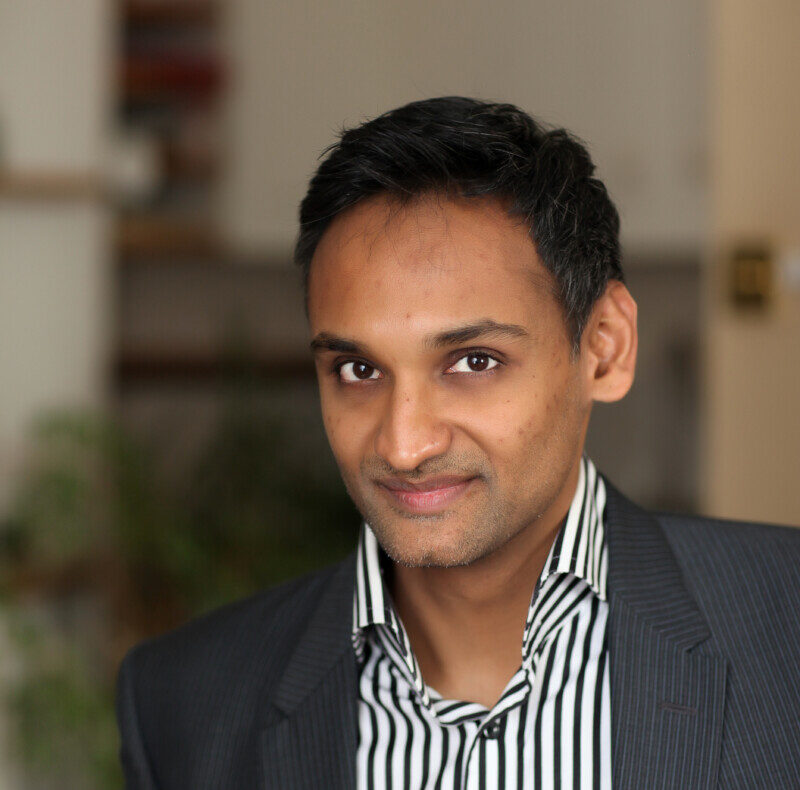
We sat down with Satish Thiagarajan, Founder and CEO of Brysa, to talk about what it really takes to make AI and automation work in practice, from cleaning up messy data and broken processes, to helping media companies grow without growing their headcount.
- What motivates you personally as a founder, and what continues to drive your success at Brysa?
I started Brysa with a very clear purpose: to change how Salesforce projects and media operations are delivered in the market. Having been on the client side myself, I wasn’t satisfied with how most consulting engagements were being run. I felt there was a gap between what clients actually needed and how solutions were being implemented. That’s what pushed me to build Brysa around “truly walking in the client’s shoes”. This involved deeply understanding their challenges and what success looks like for them.
What continues to motivate me is seeing the real impact of our work. When our solutions simplify operations or directly improve the client’s sales performance, it’s incredibly fulfilling. Knowing that what we deliver is genuinely useful and adopted by clients is the biggest reward.
Our success is driven by a couple of key factors. First is our team[1], a group of people aligned around the same client-first vision. Beyond that, we focus heavily on following Kaizen principles. We constantly refine our processes and adopt the right technologies. This includes Salesforce innovations and various AI tools to keep getting better at what we do.
- For those who are new to Brysa, how would you explain what the company does and what makes your approach to AI-driven automation genuinely different?
At Brysa, what we do is fairly focused and threefold. First, we help organisations drive technology transformation across both front-office and back-office functions. We have deep expertise in media, engineering, and the not-for-profit sector. Second, we deliver end-to-end media operations services for media clients. Third, where required, we support creative services clients by providing tailored creative capabilities to complement their broader initiatives.
Where our approach to AI-driven automation is genuinely different is in how grounded it is. We are optimistic about AI, but cautiously so. We know that AI has already delivered significant value, especially in improving personal productivity, and that’s undeniable. However, where most businesses struggle is not with AI itself, but with the lack of clean data and well-defined processes feeding into it. This often leads to pilot-level success but poor production value.
Our philosophy is simple: get the process right first. In many cases, we advise clients to use something as basic as a spreadsheet to run the process in an organised manner. Once the organisation is achieved, we automate what is appropriate. We finally introduce AI to reduce human heavy-lifting, while keeping humans in the loop.
- You often talk about getting close to customers’ real problems. How do you embed yourself into a client’s world to understand what automation can truly unlock for them?
Getting close to a customer’s real problems is critical, but it also requires the right balance. As a vendor, we’re very conscious about maintaining clear boundaries. We don’t want to simply become warm bodies adding to the problem. Our role is to bring clarity, not complexity.
We start by investing heavily in discovery. We take the time to deeply understand the client’s business without judgment. That means listening carefully, asking the right questions, and understanding not just what they do, but why they do it that way. We understand that every process they follow has a logic behind it, whether it’s driven by legacy systems, constraints, or inertia, and mapping the current state accurately is essential.
This understanding doesn’t come from conversations alone. Our consultants actively shadow users, sit alongside them, observe how systems are used in real situations, and learn the process as if they were doing the job themselves. This hands-on immersion gives us the foundation to design a meaningful future state.
Without this depth of understanding, automation can easily create downstream issues. That’s why we embed ourselves so deeply. We often work directly from our clients’ environments, so that we can solve problems from the inside out, not in isolation.
- Some people still think AI and automation sound dry or overly technical. From your perspective, what actually makes this space exciting right now?
More than being dry or overly technical, I think the reaction to AI is driven by a mix of fear and optimism. For some, there’s a real concern about what AI can do that humans can’t, and in reality, that list is quite small. For others, there’s genuine excitement about the possibilities AI unlocks and what the future could look like as a result.
Where it starts to feel dry is when we talk to businesses that do not understand how AI can function for them. They hear the hype and expect AI to magically fix everything. The reality is AI only works when the fundamentals are right. It’s like constructing a building. Building the foundation may be a boring task, but without it, nothing stands. That foundation here is clear processes and well-defined operating procedures that run like clockwork.
Businesses that understand this and are willing to fundamentally rethink how they operate will thrive in an AI-driven world. And this is what makes the space really exciting, and this is what I think is going to happen.
Creating a culture of openness and positivity around AI adoption is critical, and leadership has to set that example. When processes and data are ready, AI becomes a powerful, practical tool.
- The AI and automation market is projected to grow rapidly. Where do you see the biggest opportunities and the biggest misconceptions businesses still have?
The biggest opportunity in the AI and automation space still revolves around coming back to the basics – doing the groundwork properly. Many businesses come to us saying they’ve tried AI pilots that didn’t work, and in most cases, the issue isn’t the technology. It’s the data and the processes behind it. While AI can handle unstructured and messy data, business-critical data still needs to be presented in a way that’s clear and meaningful. Setting up that foundation requires deep consultation, a strong understanding of the business, and the discipline to clean up both data and processes. And that’s where the opportunity lies.
One of the biggest misconceptions is the rush to “do something with AI” simply because competitors are making noise. Technology will always come and go, and many tools promising quick wins won’t last. You can’t put the cart before the horse. If businesses spend focused time getting their processes and data in order, AI adoption will become significantly faster and more effective. I often compare it to sharpening an axe. It may feel unproductive at first, but once the blade is sharp, the real work happens quickly.
Another misconception is that this is hard. It isn’t. It’s basic hygiene. But it’s work that many organisations have postponed, but now can no longer afford to ignore.
- You often work with media companies. Looking specifically at the UK landscape, what do you see as the major opportunities and threats for media companies adopting AI and automation?
In the UK media landscape right now, two seemingly contradictory forces are at play. On one hand, there’s significant growth. We’re seeing entirely new forms of media emerge, with retail media being a prime example. Retailers that traditionally had nothing to do with media are now generating meaningful advertising revenue, and even AI platforms like ChatGPT and Gemini are doing the same. As a result, the definition of what constitutes “media” continues to expand rapidly.
On the other hand, there’s intense pressure on margins. While supply is growing, demand is becoming far more disciplined. Brands are operating in a tougher economic climate and are far more focused on ROI, efficiency, effectiveness, and brand safety. Media owners and agencies are finding that campaigns which once generated the same revenue now require significantly more effort to deliver. This is increasing costs across resources, servicing, and operations, while returns shrink.
This is where the real opportunity lies. Media companies must focus on growing efficiently. AI and automation can help ensure that revenue growth doesn’t require a proportional increase in human effort. We’ve seen firsthand how the right systems can save thousands of hours and effectively add capacity without adding headcount. Those willing to invest in automation now can grow profitably and sustainably despite these pressures.
- What is the biggest misconception media owners have when they first begin an automation project?
The biggest misconception media owners have is that they can continue to rely on humans and spreadsheets because “that’s how it’s always worked.” Many feel their business is relationship-driven, that strong ties with agencies will continue to bring in revenue, and that operating in a niche somehow insulates them from the need to automate.
That mindset is risky. Agencies themselves are under immense pressure. Their margins are tightening, and they’re being asked to justify every media buying decision with clear data and measurable value. Relationships may carry you for a while, but they won’t sustain the business long term.
When that pressure intensifies, agencies will look for media partners who can move fast, provide robust data, and deliver real, demonstrable value. Without automation, media owners are forced to compensate by adding more human effort, which only drives costs up further.
This is why the misconception needs to be challenged early. Automation isn’t about replacing relationships. It’s about supporting them with speed and insights.
- Automation efforts often stall because no two teams work the same way. What’s your advice to media leaders on building consistency without slowing people down?
This is tricky and needs a fine balance. Many media leaders who have grown their businesses to a certain scale need to play both roles: the good cop and the bad cop.
On one side, you have to inspire change by creating a culture of confidence and openness, where teams feel supported in trying new ways of working. On the other hand, you also need to challenge teams to change. Certain functions, especially operations and finance, are naturally more risk-averse because the cost of mistakes is higher. That reluctance is understandable, but it can’t become a reason to stand still.
Leaders must actively push teams to adopt new processes and automation, rather than letting comfort dictate the pace of progress. Otherwise, drift becomes inevitable.
Equally important is choosing the right consulting and implementation partner. Some of them adopt the rinse-and-repeat approach, which rarely works, even within the same industry. Teams operate differently, and success depends on consultants who take the time to deeply understand those differences and co-create solutions with the teams. That combination is what drives consistency without slowing people down.
A successful case where this approach worked is with View2Fill[2], a client with whom we successfully transformed a heavily spreadsheet-based manual set of processes to a streamlined and automated systems-based one.
- What excites you most about Brysa’s future, whether that’s your platform, product direction, or the way organisations are starting to adopt automation?
What excites me most is what the next few years are going to bring. The market is clearly maturing. And we’re already seeing that reflected in increased M&A activity. That maturity creates significant opportunities for us to help organisations operate more efficiently and become more growth-oriented.
At our core, Brysa is a service company. We exist to serve our clients. As more organisations begin adopting automation at scale, we’re in a strong position to help them get it right the first time, rather than going through multiple failed or partial implementations. That’s particularly important in fast-evolving ecosystems like Salesforce and Agentforce, where the pace of change can easily overwhelm teams without the right guidance.
What’s even more exciting is seeing these technologies move beyond experimentation and start making a real difference in day-to-day operations. So, helping organisations turn automation into something practical and impactful is where we believe we add the most value, and that’s exactly where Brysa’s future is headed.
- Can you share a defining moment in your career that shaped the founder you are today?
One defining moment in my career came when I was on the client side, working with an implementation agency that was simply following a predefined playbook. It became clear that they were more focused on executing a standard solution than truly understanding what I was trying to achieve. That experience was frustrating, but it was also eye-opening.
It made me realise that consulting doesn’t have to work that way. Agencies can and should be far more empathetic and thoughtful in how they engage with clients. Instead of leading with solutions, they need to spend time understanding the real problems first. That means listening deeply, asking better questions, and appreciating the nuances of a client’s business before proposing any form of implementation.
That moment fundamentally shaped how I approach leadership and how we operate at Brysa. It reinforced the belief that meaningful transformation starts with clarity, not tools. By putting the problem before the solution, we’re able to deliver work that’s more relevant, more effective, and far more likely to succeed in the long run.
- Are there any entrepreneurs or leaders, inside or outside of tech, who have meaningfully influenced how you build and scale Brysa?
I’ve been fortunate to be influenced by several entrepreneurs and leaders who have played a meaningful role in how we build and scale Brysa. We’re supported by a strong group of advisors, spanning both tech and non-tech backgrounds, who bring valuable perspectives to our journey.
One of them is Brett Dawson, who successfully scaled and exited a large media agency in Australia. He works closely with us on shaping the business, refining our strategy, and thinking clearly about scale. We also work with Neil Morris, who built and exited Grand Visual in the UK. His experience has been especially valuable in helping us navigate the realities of building a services-led business in a challenging and evolving media market.
Another key influence is Rob Atkinson, former CEO of Clear Channel. He brings a strong strategic lens and continually challenges us to think long term, particularly around how we consistently add value to our clients.
Each of these advisors played a critical role in our growth. Their input shaped our thinking and helped us stay grounded while building Brysa with intention and clarity.
- There’s a narrative that successful founders must keep extreme routines. What does a realistic working rhythm look like for you?
I wish I could say extreme founder routines are just a narrative, but the reality is more nuanced. What feels extreme to one person may be completely normal to another. So “extreme” is always relative. That said, founding a company is not easy, especially when you’re juggling multiple responsibilities at once.
In our case, being a bootstrapped business adds a different kind of pressure. Cash flow, resourcing, and growth decisions are all closely linked, and every move has to be calculated. That naturally takes a toll. This is where routines become essential. Not because they’re glamorous, but because they bring discipline and structure. Regular internal check-ins, quality control, putting processes in place, and ensuring those processes actually stick all require rigour.
Routine, for me, is about creating consistency so the business can survive and grow in a challenging market. That part is unavoidable. However, there’s no single formula for what a founder’s day should look like. If waking up at 4 a.m. works for someone, great. If starting later works better for you, that’s fine too. What matters is finding a rhythm that works across all dimensions of the business and sustaining it over time.
- Finally, what advice would you give to upcoming founders who want to build a business in the AI or automation space?
I’m not a big believer in giving blanket advice. What works for one founder may not work for another. Building a business is deeply personal, and everyone has to figure out their own path based on their strengths and constraints.
That said, one thing that has genuinely helped us at Brysa is surrounding ourselves with the right people. Having a strong group of mentors, advisors, and experienced influencers has made a real difference. They bring perspectives shaped by years of experience. They help us think through decisions. And most importantly, they help us avoid certain mistakes. While you never fully know the opportunity cost of the paths you don’t take, that guidance provides valuable clarity.
Beyond advice, this group creates a space to talk through ideas and refine thinking. It becomes a kind of scaffolding around which the business can grow more thoughtfully and sustainably.
For us, that support system has been invaluable. And while every journey is different, building a trusted circle of experienced voices can be a powerful asset for any founder navigating the AI or automation space.
[1] https://brysa.co.uk/about-us
[2] https://brysa.co.uk/insights/view2fill-media-services-case-study




