The High-Spec VFX Powering London’s Newest Ancient Archive
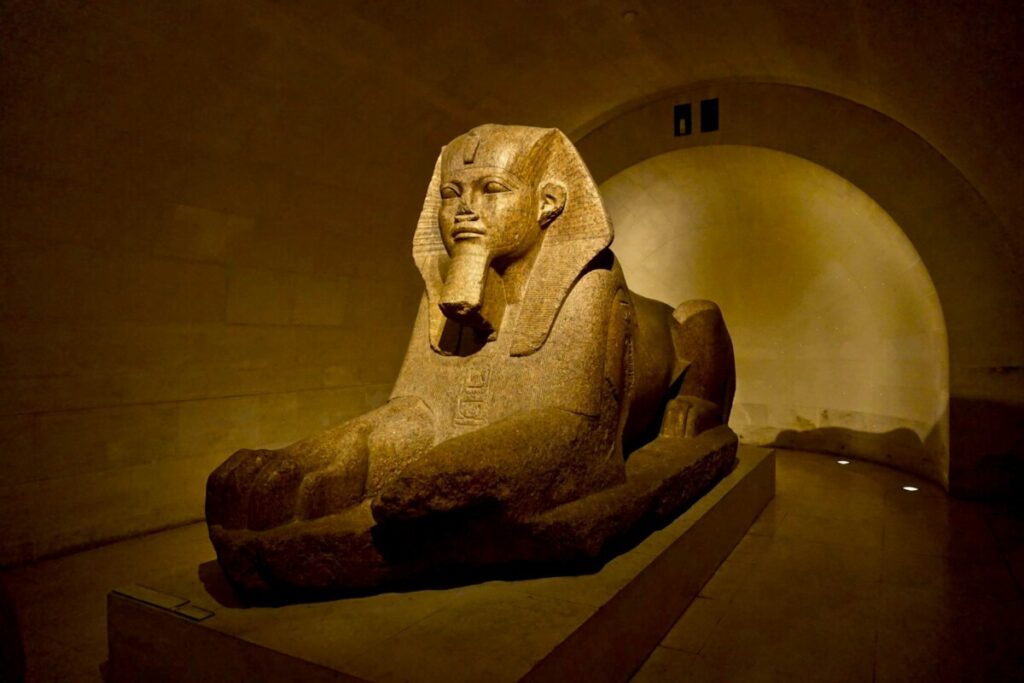
While Battersea Power Station is better known for its iconic chimneys, its latest resident is a different kind of architectural giant. The Ramses and the Pharaohs’ Gold exhibition has arrived at NEON following the success of Jurassic World: The Experience, which ended its run in January.
The Ancient Egyptian showcase, which debuted in 2022 at the Houston Museum of Natural Science, brings a 180-piece collection of 3,000-year-old treasures to London following high-profile runs in San Francisco, Sydney, Paris and Tokyo. Visitors are invited to explore a fascinating collection of genuine Egyptian treasures, ranging from the legendary cedar coffin of Ramses II to intricate gold funerary masks and rare animal mummies.
A “Truly Immersive” Experience
For many, the exhibition’s highlight will be the cinematic reconstruction of the Battle of Kadesh, an installation that Visit London singled out for its “considered” and “truly immersive” application of technology. This was a significant undertaking, requiring a six-month development cycle to render.
By synchronising 3D asset modelling with large-scale projection mapping and transparent LCD overlays, the developers have visualised the tactical complexities of the ancient world’s largest chariot engagement. According to World Heritage Exhibitions President Anthony Tann, who worked with the Houston Museum of Natural Science to produce the sequence, it is designed to engage viewers by transforming archaeological data into a coherent story depicting Ramses’ stand against the Hittite forces.
The structural integrity of these visuals relies on photogrammetry — a method of stitching thousands of high-resolution drone photographs into a 3D game engine to create precise digital twins of sites like the Ramesseum and Abu Simbel. This framework allows for CGI rendering that restores the original ruby, ochre, and turquoise pigments to the temple walls, offering a stark contrast to the weathered sandstone visible today.
Beyond the battlefield, the exhibition’s technical suite includes projected CT scans that non-invasively reveal the interiors of mummy wrappings and time-lapse visualisations that compress millennia of architectural decay into minutes. It is a sophisticated combination of archaeology and high-end VFX, demonstrating how digital reconstruction is becoming essential to modern heritage storytelling.
Another Popular Event at NEON
The exhibition is set to be as popular as Jurassic World: The Experience, which was extended due to demand. The allure of ancient Egypt is as potent as it has ever been. The recent Tutankhamun: The Immersive Experience was a hit in both London and Glasgow last year, for example, while small-screen hits like Apple TV’s Bradley Walsh: Egypt’s Cosmic Code have struck a chord with audiences. Similarly, in iGaming, long-term hits like Cleopatra have been joined by new slot games such as Mummy It Up on online casino platforms, further highlighting the broad appeal of this ancient civilisation.
A Technological Shift in Heritage Storytelling
By blending high-end VFX with 3D game engines, Ramses and the Pharaohs’ Gold marks a shift in heritage storytelling. Through photogrammetry and projection mapping, the exhibition proves that the future of archaeology lies in digital twins, allowing tech-savvy audiences to witness the ancient world’s original splendour with unprecedented cinematic precision.




