2016 Was the Year of Mobile for Users. 2026 Will Be the Year of Mobile for Every Business
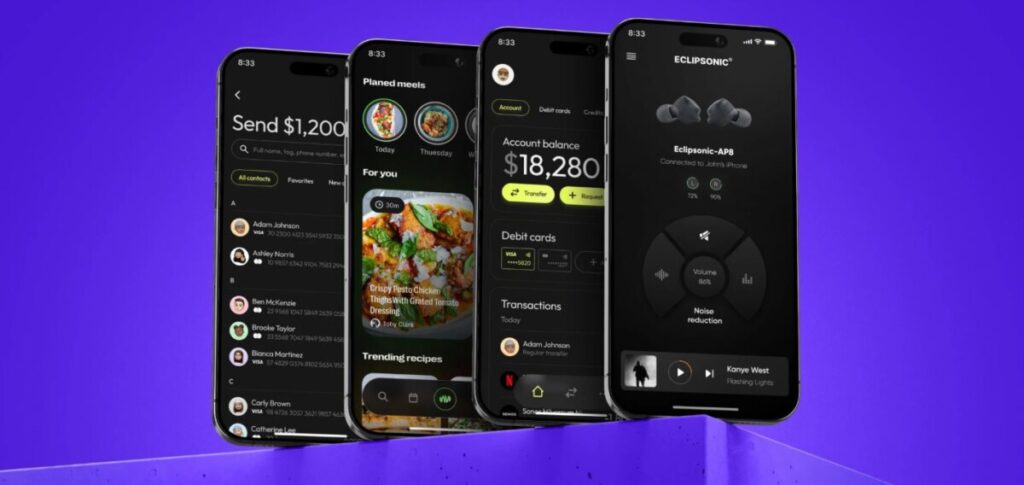
In 2016 — widely described as the Year of Mobile — a pivotal shift took place in user behaviour, marking the beginning of the mobile‑first era. In 2026, driven by advances in AI, this shift is entering a new phase in which mobile becomes the default and foundational layer of business infrastructure, argue experts from Miquido. What exactly do they mean?
In the years following Steve Jobs’ 2007 unveiling of the first iPhone — a device that combined a music player, phone and internet communicator — the divide seemed clear: smartphones were for entertainment and communication, while serious tasks were handled on computers. That line blurred quickly as users grew increasingly comfortable shopping or managing finances on a handheld device, and app stores opened a world of new possibilities. Suddenly, something as complex as renting a car on a foreign holiday could be done in under a minute — an experience that previously involved significant hassle.
Not Super‑Apps, but Smart Apps: Where Is Mobile Heading Next?
Back in 2013, Skyscanner launched its Car Hire app — an early attempt at simplifying rental bookings. Its initial version lacked functionality, so a new iteration was developed and further expanded by the Kraków‑based software house Miquido. The company’s founders had already recognised the potential of mobile applications and made the strategic decision to specialise in this segment of the IT market. Today, the Skyscanner app — which now integrates three formerly separate services: car hire, hotel booking and flight search — is used by tens of millions of people.
More than a decade after the release of its core module, Miquido experts suggest the future of mobile lies not in merging multiple functions, but in personalising them for every individual user.
“Drawing on experience from the Asian market, we once assumed Europe would follow in the footsteps of Chinese super‑apps like WeChat — often described as an ‘everything app’,” explains Piotr Polus, Head of Technology at Miquido. “But European users have shown little interest in apps that combine entertainment, gamification and social modules. What we are seeing instead, particularly among Polish banks, is rising demand for intelligent personalisation. A Gen Z customer typically uses different products than, say, an older client — and an app can learn this, adjusting its interface to each user. It shortens purchasing paths, improves conversion and makes everyday use simpler.”
Why Was 2016 the Year of Mobile?
Over a decade ago, the tech industry was fixated on the phrase “the year of mobile,” much like it is now with “the AI era.” Predictions came annually — and then, in autumn 2016, the tipping point arrived. From that moment on, statistically, users spent more online time on their phones than on computers, and mobile traffic overtook desktop for most online services.
“For businesses, the Year of Mobile arrived slightly later than for users,” notes Piotr Polus. “Companies needed time to follow their customers and redesign their apps so that mobile shifted from an additional contact point to the default one. We saw this clearly while working with Diagnostyka, a major medical testing provider. Initially, the app simply allowed customers to view their past test results. But once the option to order tests via the app was introduced, user interest exceeded all expectations.”
Mobile First for Every Business
According to Miquido’s experts, pinpointing the exact moment when companies embrace “Mobile First” is not straightforward. The shift becomes apparent instead through visible changes in customer behaviour. One example: airlines such as Ryanair and Wizz Air, where mobile apps have become the primary channel for flight search and customer service — including airport gate access.
“Mobile is no longer just a channel — it’s the operational backbone of modern service and enterprise businesses,” says Tomasz Gunia, General Manager at Miquido. “It helps attract customers, maintain long‑term engagement, collect data and automate support. Many businesses have sold or grown through mobile before, but now mobile is becoming the main channel for most B2C companies.”
2026: The Year of Agentic Mobile
Just as the mobile revolution seemed to have reached maturity, AI tools arrived. Much like mobile a decade earlier, AI is currently an additional layer — often appearing as a small chat window that users interact with occasionally and without high expectations.
But not every app is evolving into a conversational interface for a large language model. If that were the case, mobile apps would soon resemble standalone LLMs such as Gemini, now pre‑installed by default on Android devices.
In the U.S. market, tools like Google Duplex can already make calls to book restaurant tables or summarise conversations. But despite predictions, service businesses are not widely adopting this approach — and most users do not expect AI to handle every task on their behalf.
Instead, AI is becoming an essential layer working in the background: integrating and processing data, personalising navigation and smoothing the user journey.
“AI agents will significantly improve post‑purchase support — from handling returns and complaints to addressing unusual queries,” forecasts Piotr Polus. “This is what AI will focus on first: enabling seamless self‑service within apps and lowering operational costs for businesses.”
What Else Will Shape the Market?
Several developments depend on what innovations Google and Apple introduce in the coming years — their tools have historically had enormous influence on mobile. Past examples include dark mode or push notifications, which transformed user experience and app engagement.
“Right now, device‑level AI capabilities from both Apple and Google are gaining importance, as well as what we might call ‘visual personalisation’ — deeper, more adaptive ways of customising the interface to each user,” notes Polus.




