The 9 Best AI HR Software Tools for Medium Sized UK Companies

Top Solutions for Smarter, Scalable Growth
HR tech in the UK is moving quickly in the mid-market arena. For growing teams, finding the best AI HR software that local companies can rely on is more than just going paperless now. Modern mid-market businesses have to factor in both saving time and keeping everything running smoothly.
For HR professionals traversing the now thriving market for HR software, it’s easy to be duped by tools that promise a lot, but don’t actually make day to day work easier. Sure, the good ones handle things like payroll, compliance, and reporting in a way that fits UK rules. However, the best ones also offer scalability for businesses that have an eye on expansion.
With that in mind, it seems almost sacrilegious to mention software solutions in 2026 without also assessing their AI capability. Given how rapidly AI-powered HR software is becoming the norm, we specifically tested the best AI-driven HR software for UK businesses competing in the mid-market sector.
To simplify the process of choosing one, we thoroughly reviewed the best options and picked out nine of the strongest options available this year. The focus is on how they work in practice. That means how easy they are to use, how well they leverage AI, and what real users in the UK are saying about them.
The role of AI in modern UK human resources
Whether used agentically, predictively, or just to automate tasks that used to require tedious human input to manage, AI is changing HR software in some remarkable ways. When used in an optimum manner, these systems can fundamentally change how modern UK companies manage their workforces and HR-related compliance workflows.
More importantly, algorithmic assistance helps unlock insights that were previously buried in spreadsheets. It can detect patterns in staff feedback, highlight compensation inequities, and suggest targeted learning paths for staff development. While still requiring human oversight, HR software powered by AI empowers leaders to be more efficient and accurate than ever before.
In the UK, staying compliant with labour laws and adherence to the General Data Protection Regulation and local data residency laws are non-negotiable. With the right AI-driven HR software, these HR functions can run like clockwork.
Our criteria for selecting the best AI-powered HR software in the UK for mid-market businesses
Selecting the best systems meant covering everything from the basics to the features that provided real-world value. In the UK, that meant looking at how these systems handle core HR functions like payroll and leave management. This was all also evaluated against automation offerings that made such tasks easier to manage at scale.
For the AI functionality itself, it wasn’t enough to just test time-saving through automation. For the litmus test, we checked which solutions provided value-adds that enhanced decision making through the kind of insights the AI systems could provide and how this affected the overall quality of HR tasks.
Crucially, we also checked the data security protocols to ensure that customer data is not used to train external models. For UK companies, that aspect is vital for General Data Protection Regulation compliance.
We then analysed user feedback from major review sites like G2 focusing on comments from mid-sized companies regarding ease of use, implementation time, and technical support quality.
Finally, we considered how well each application supports global operations and multi-country compliance for businesses that want to expand. Here’s how our top picks measured up.
1. HiBob
 Overview
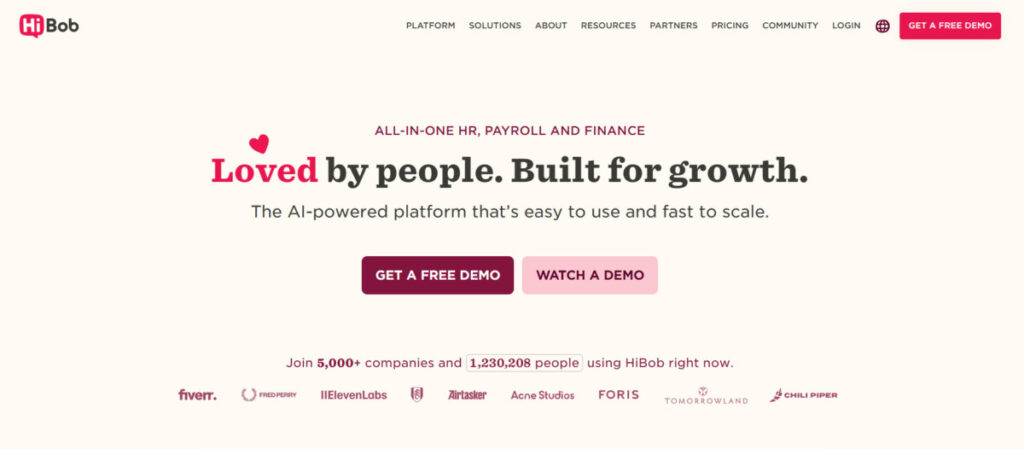
Leading the pack is HiBob, a comprehensive application built specifically for fast growing mid-sized and multinational companies. It consolidates compensation, talent tracking, staff planning, and culture building tools into one intuitive system. The application is designed to adapt to each organisation’s unique structure and culture.
Artificial intelligence capabilities
The approach to generative text and predictive analytics here is what truly sets it apart. The technology is embedded directly into everyday workflows. It helps leaders draft staff appraisal feedback, generates job descriptions, and summarises survey responses to highlight key trends. Furthermore, the application prioritises data security. There is zero data retention by machine learning vendors, and no customer data is used to train models. This ensures complete compliance with strict European and British data privacy laws.
User feedback
Users consistently praise the modern, intuitive user experience that drives high adoption rates across the company. The deep localisation supports global and multi-site operations seamlessly. However, some note that the comprehensive feature set may require a dedicated administrator to manage effectively.
2. Rippling
 Overview
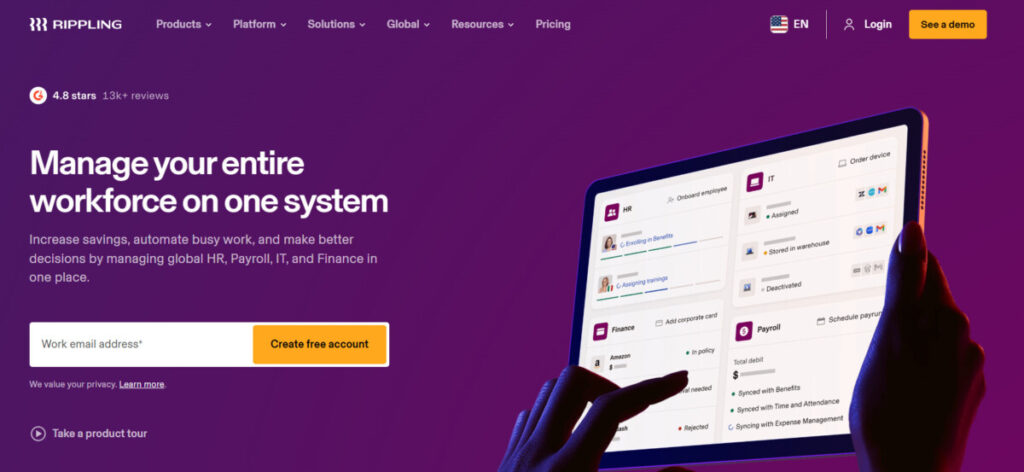
By intertwining computer hardware assignments with staff profiles, this provider allows companies to control access rights alongside traditional tasks. You can read more about user experiences on Rippling on Capterra.
Artificial intelligence capabilities
The application relies heavily on if-then logic and workflow automation rather than generative text. It excels at triggering actions across different systems, such as automatically provisioning software accounts when a new staff member is hired. However, it lacks the deep, conversational smart automation features found in more modern applications.
User feedback
While the automation capabilities are strong, the broad scope creates a steep learning curve. Users frequently report that the interface is complex and overwhelming. Technical support is a major pain point, with many users complaining about the reliance on automated chat bots and scheduled support calls rather than immediate live assistance.
3. Personio
 Overview
Operating out of Munich, this vendor has built a strong reputation for European compliance, offering tools for recruitment, attendance tracking, and document management. Customer feedback is available on Personio on G2.
Artificial intelligence capabilities
They have begun introducing basic smart automation features, primarily focused on parsing resumes and automating simple data entry tasks. The technology is still in its early stages and does not yet offer the advanced managerial insights or feedback generation seen in top tier competitors.
User feedback
Despite its popularity for European compliance, the application has limitations that affect mid-market companies. The pricing structure requires a sales consultation and scales with headcount and add on applications. Users also find the staff appraisal tools to be overly rigid, which does not suit agile teams.
4. UKG
 Overview
A heavyweight contender, UKG provides enterprise grade software designed for massive workforces, focusing heavily on labour scheduling and complex regulatory requirements. User perspectives can be found on UKG Pro on Capterra.
Artificial intelligence capabilities
UKG uses smart automation primarily for workforce forecasting and complex scheduling optimisation. It can predict labour needs based on historical data. However, these features are highly technical and geared toward massive enterprise operations rather than the agile needs of a mid-market company.
User feedback
For mid-market companies, this system is generally considered too heavy and restrictive. Reviewers frequently complain about the outdated interface and sluggish performance. The implementation process is lengthy and often requires significant technical expertise to extract basic data.
5. BambooHR
 Overview
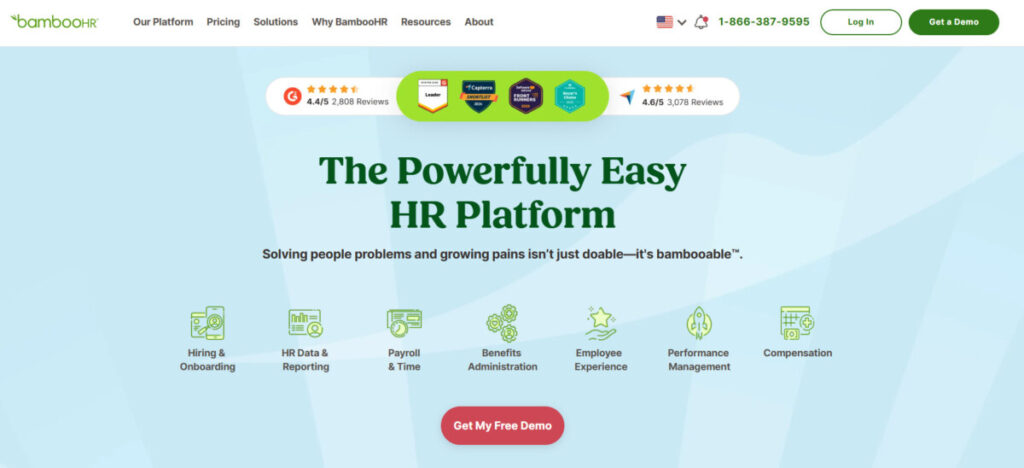
Aimed squarely at small operations, BambooHR is widely recognised for helping small businesses transition away from paper based processes. It provides a straightforward interface for tracking time off and staff records. You can view customer opinions on BambooHR on G2.
Artificial intelligence capabilities
The smart automation features here are very limited. The application focuses on simplicity and basic record keeping, meaning it lacks the smart automation, predictive analytics, and generative content tools that modern mid-market companies require to scale efficiently.
User feedback
While it serves small domestic teams well, it struggles to meet the needs of scaling mid-market organisations. The application lacks the advanced customisation required for complex workflows. Users frequently note that the reporting capabilities are limited, making it difficult to extract granular insights.
6. Sage HR
 Overview
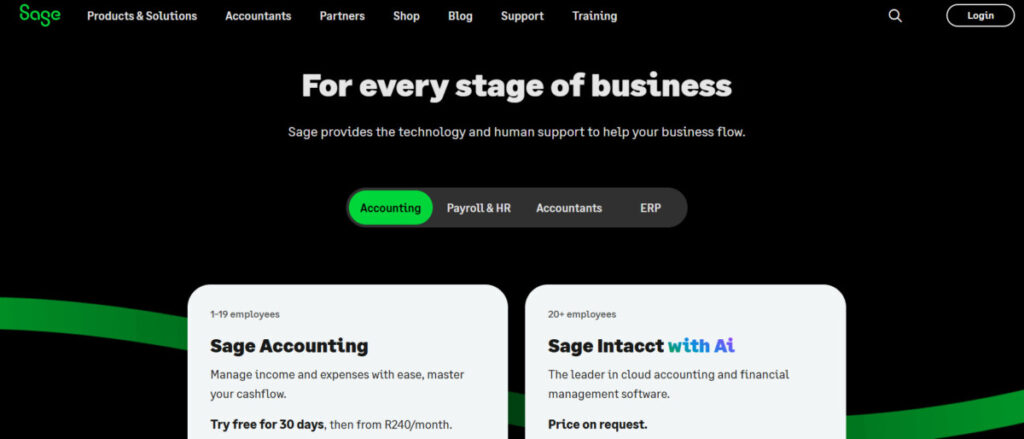
Operating on a component based purchasing model, Sage HR offers a modular system that allows businesses to pick and choose specific features, such as shift scheduling and staff appraisals. User reviews are available on Sage HR on Capterra.
Artificial intelligence capabilities
Sage HR has integrated some basic smart automation for reporting and data visualisation, but it remains largely a traditional software system. It does not offer the advanced workflow automation or managerial guidance tools that define the best smart automation applications in this space.
User feedback
The modular approach provides initial flexibility but often leads to unpredictable costs as a mid-market business grows. Users report that the interface is not intuitive, which hinders adoption across the team. The application also lacks a native compensation solution, forcing companies to rely on external connections.
7. Deel
 Overview
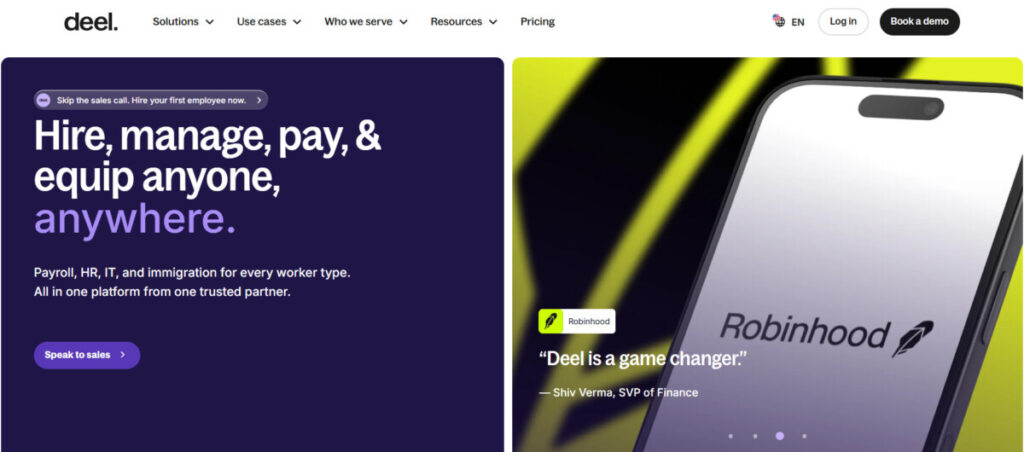
Famous for facilitating cross border contractor payments, Deel is primarily known as an employer of record service, allowing companies to hire contractors and staff globally without setting up local entities. They have recently expanded into offering core workforce features.
Artificial intelligence capabilities
Deel uses smart automation to help navigate complex global regulatory and tax laws, which is highly effective for international hiring. However, their smart automation capabilities regarding core workforce functions like staff appraisals and culture building are still minimal.
User feedback
While their global compensation and regulatory tools are excellent, their core workforce functionality is still quite basic. Mid-market companies often find that the staff appraisal and talent tracking features lack the depth needed for a comprehensive strategy.
8. Moorepay
 Overview
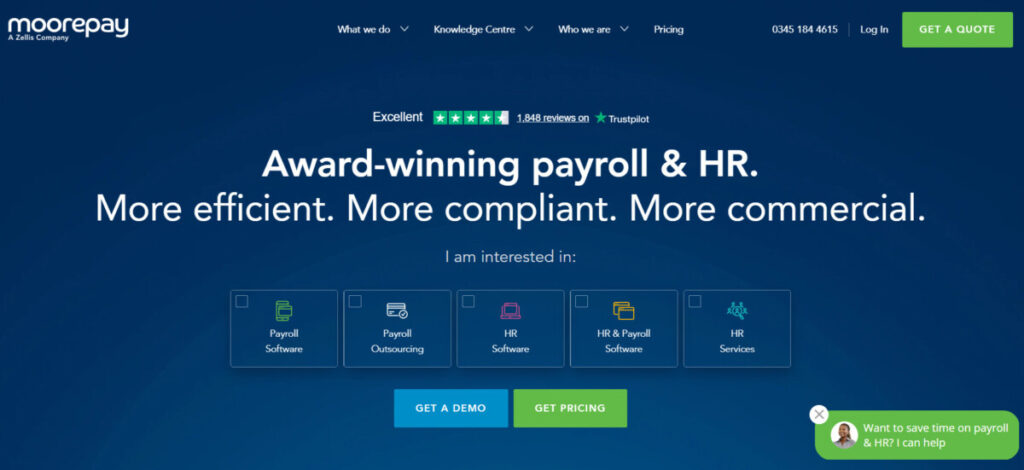
A veteran in the British compensation space, Moorepay is a well known provider focusing heavily on compensation processing and basic workforce administration. It is widely used by local businesses that need reliable tax calculations.
Artificial intelligence capabilities
Moorepay is a legacy system that has been slow to adopt modern smart automation. It lacks the generative tools and predictive analytics that modern applications use to empower leaders. The system remains focused on manual data entry and traditional reporting.
User feedback
Users appreciate the reliability of the compensation processing, but frequently complain about the outdated user interface. The system feels clunky and requires too many clicks to complete simple tasks. It also lacks the scalability required for companies expanding internationally.
9. CharlieHR
 Overview
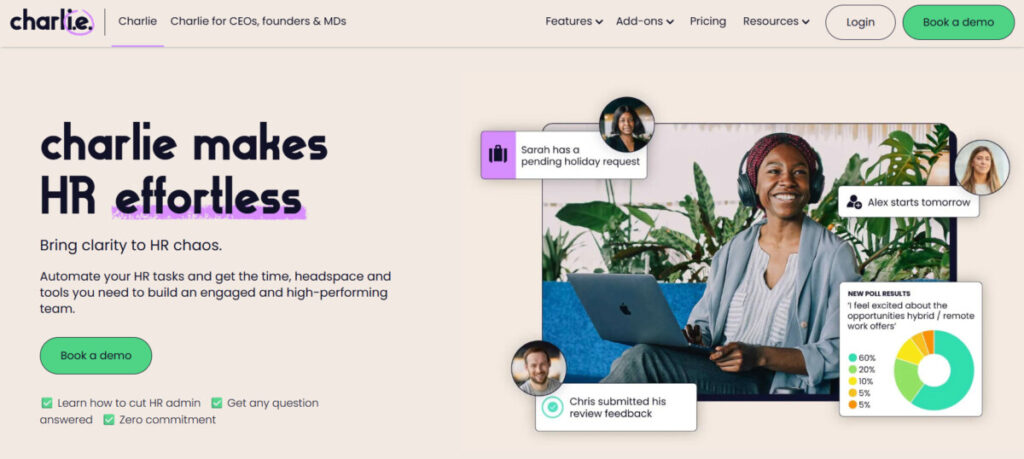
A lightweight application popular among London startups, CharlieHR is designed specifically for small businesses in the United Kingdom. It offers basic tools for booking time off, storing documents, and running simple staff appraisals.
Artificial intelligence capabilities
Because it is built for small teams, it completely lacks advanced smart automation features. There are no smart insights, no generative feedback tools, and no complex workflow automations available on this application.
User feedback
It is a great tool for a company with twenty employees, but it breaks down when trying to manage two hundred. It completely lacks the scalability required by mid-market companies and cannot handle complex global compensation connections.
Wrapping up the best AI HR software options for the UK mid-market sector
Selecting the right HR system in 2026 matters as your business grows. The best ones we evaluated make daily work easier in ways that employees and HR professionals alike can actually measure.
For us, the overall best choice was an easy one, HiBob stands out for its ability to strike a strong balance between ease of use and practical features. The fact that HiBob’s HR software also helps cultivate a uniform company culture was also a pleasant surprise. Features like that go the extra mile. Beyond normal functionality, it can help enhance a company’s productivity in immeasurable ways.
As for automation, HiBob’s AI capabilities aren’t just for show. They provide real insights that have real-world application.
FAQs about the best AI HR software UK mid-market providers in 2026
What defines the best AI HR software UK mid-market companies can use?
The top applications integrate smart automation directly into daily workflows to reduce manual administrative tasks. When using a system like HiBob, leaders receive intelligent insights and summaries that help them make better decisions without losing human oversight. This ensures that your technology actively supports your team rather than just storing data.
How does smart automation improve staff appraisals?
Machine learning tools can analyse feedback patterns and suggest constructive language for leaders during review cycles. This helps managers write more effective evaluations in less time while maintaining a fair and transparent process. It removes the blank page anxiety and ensures that feedback is actionable and aligned with company goals.
Is my company data safe with smart automation features?
Data security depends entirely on the vendor you choose to partner with. The most secure applications ensure zero data retention by machine learning vendors and guarantee that your sensitive staff data is never used to train external models. You should always verify these security protocols before implementing any new software.
Should a mid-market company buy enterprise software?
While mid-market companies can purchase enterprise software, they often find it too complex, slow, and rigid for their agile needs. It is usually much better to select an application specifically designed for scaling mid-market businesses to ensure a better user experience. This approach guarantees faster implementation and higher adoption rates across your entire organisation.
Can smart automation help with global compliance?
Yes, advanced applications use smart automation to monitor changing labour laws and tax regulations across different countries. This helps mid-market companies expand internationally without needing a massive legal team. The software can flag potential regulatory issues before they become expensive problems for the business.




