Why Cyber Resilience Starts Before an Attack Happens
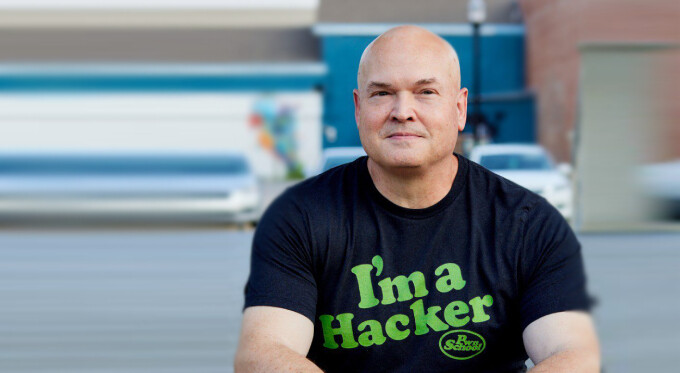
Phillip Wylie has spent more than 28 years working across cybersecurity and IT, with a career spanning network security, application security, penetration testing, red teaming and social engineering. As an ethical hacker and offensive security expert, his work focuses on showing organisations where their weaknesses are before malicious attackers find them first.
He is the co-author and concept creator of The Pentester BluePrint: Starting a Career as an Ethical Hacker, a podcast host, and the founder of initiatives including The Pwn School Project and DEFCON Group 940, both centred on widening access to practical cybersecurity education. In 2023, he was named a SANS Difference Maker by the SANS Institute for his contribution to advancing skills within the profession.
Known for making complex cyber issues accessible, Phillip brings a practical view of what resilience means during a real incident, why people and processes remain central to security failures, and how ethical hacking can help improve public awareness, trust and everyday digital safety.
In this exclusive interview with the London Keynote Speakers Agency, Phillip discusses cyber resilience, ethical hacking, incident planning, human risk and why cybersecurity education must be clear, practical and accessible.
Question 1. In a live cyber incident, how should organisations define and practise resilience beyond simply restoring systems?
Phillip Wylie: Resilience really goes back to planning. You have to have a good plan. You need an incident response plan.
In case you’re ever breached or have any kind of incident, you’re able to have a plan in place. You’ve got all your contacts that need to be contacted during the breach or the incident to be able to contain that.
Being planned out properly and making sure you have a list of folks to contact during those incidents.
The better you are planning-wise, the better you’re going to be during a real-world incident.
This can even be comparable to your home. Say if you have a family and you teach your children, “Okay, if there’s a fire, we need to go to this place, we need to do this,” it’s going to be a lot better than if you’re trying to panic if something actually does happen.
Planning is key, and a good incident response plan is part of that.
Question 2. Why do cybersecurity failures so often come down to people, process and operational discipline, rather than technology alone?
Phillip Wylie: They matter because humans are actually configuring and controlling these devices.
If it’s not configured properly, or they’re not reacting to alerts, then it’s only as good as the person operating and configuring it.
Question 3. How does ethical hacking improve public understanding of cyber risk, beyond its role in testing and protecting systems?
Phillip Wylie: Ethical hacking helps people see what is possible by threat actors and malicious hackers.
It’s security awareness because, in some cases, someone could mention that if you don’t have proper password length set and not really give you examples, then it’s hard to teach that lesson.
But if you get examples of how those can be exploited, it resonates more with people.
Some of the best security awareness training I’ve seen is where they do demos of the different types of hacks. People see how they work, then they’re going to be more likely to protect themselves and learn some best practices to stay secure.
Question 4. When you speak to non-technical audiences, what do you most want them to understand about cybersecurity?
Phillip Wylie: One of the things I get a lot is I’m able to explain complex topics where people can understand it.
When I give my speeches, I want people to be able to understand and learn something from that, and enjoy it as well.
I like for my presentations to be enjoyable and not boring. One of the main things I want them to do is come away learning something.
This exclusive interview with Phillip Wylie was conducted by Tabish Ali of the Motivational Speakers Agency.




