How UPS systems keep UK data centres and businesses running during power outages
Power cuts remain an issue in the UK, in part because of its ageing grid infrastructure and unpredictable weather – two things that are predicted to worsen. For British businesses, outages are an operational risk, and it’s costing the economy – and subsequent businesses – billions each year.
The cost of power outages
A power outage doesn’t mean the lights are on the blink, it can mean a loss of sales. Some common issues include:
- Wipe unsaved work
- Corrupt files mid-transaction
- Trip safety systems
- Damage hardware
For a small office, it turns into a frustrating afternoon. For a manufacturer mid-production run, it can be a lot more expensive.
Regulators have actually tried putting a price tag on this. It’s not easy, but research commissioned for Ofgem found a headline value of lost load of £16,940 per megawatt-hour. This is the average payment business customers would accept to experience an outage during peak winter.
Data centres and hospitals can’t afford downtime
Now scale that up to entire hospitals or data centre. A data centre hosting services for hundreds of clients can’t tolerate even a momentary blip – a few seconds without power can mean corrupted databases or failed financial transactions. At the very least, an awkward call to clients about why their site went dark.
Hospitals are the most concerning example. Life-support machines and patient record systems cannot go offline – it’s not in question, and this is exactly where UPS systems earn their keep. UPS systems are the safety net between a mains failure and backup generators kicking in, so nothing skips a beat.
How uninterruptible power supply systems protect equipment
An uninterruptible power supply sits between the mains and your equipment. It constantly watches incoming power. The moment it detects a dip or full outage, it switches to battery power instantly. Zero interruption. Many units also clean up dirty power so to speak, smoothing surges that quietly degrade electronics long before anyone notices a failure. So they can be protective and earn their return in increasing the lifespan of devices.
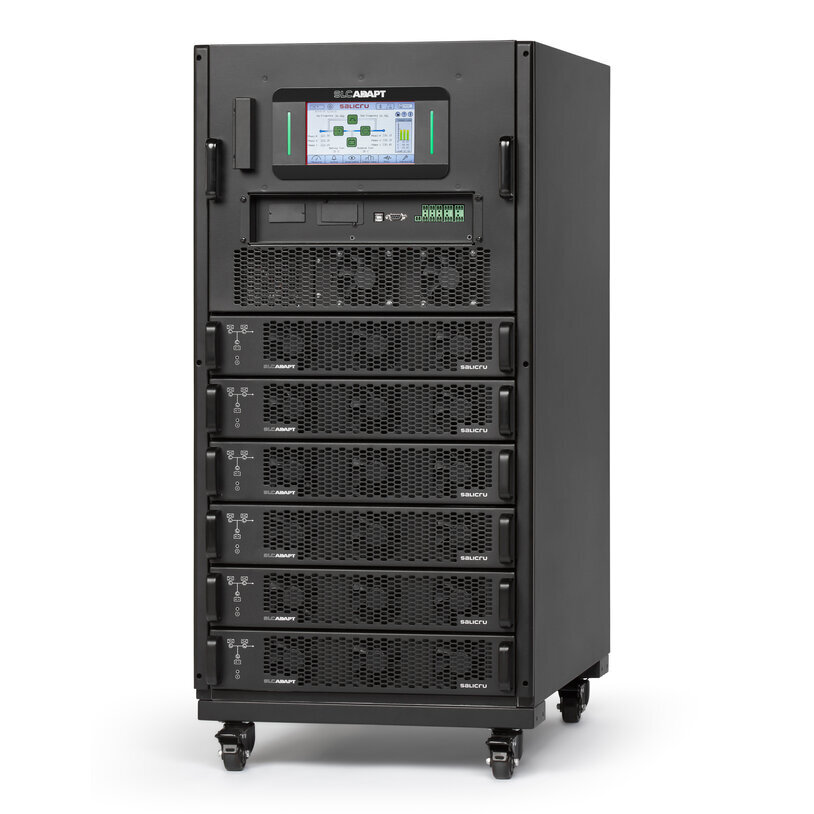
Manufacturers across Europe are building businesses around these. Salicru is one such example – a long-established Spanish manufacturer producing UPS systems ranging from single-server units to large industrial installations. It’s the kind of kit that no Brits think about until it’s needed.
Manufacturing, offices and the pressure on UK power supply
Manufacturing lines can lose entire production batches to a brief outage. Melted plastics, ruined chemical processes, machinery needing a full reset before it’ll run again are just some examples. Offices feel it differently, certainly, but no less painfully, as they experience server crashes, lost files, and a workforce sat idle while IT scrambles.
The wider picture isn’t particularly reassuring either. Britain’s spare electricity capacity during peak winter has, at points, fallen to its lowest level in seven years (as per National Grid ESO). Not exactly comforting for businesses that depend on the grid behaving itself.
Building business continuity
Pull all this together and the message is that power protection is becoming a part of how a business stays standing. Unless you’re a small team using laptops and cloud-only systems, a solid UPS setup can be a core part of the wider business continuity plan. Outages will become unnoticeable, or strangely, even a competitive advantage.