Inside the AI art revolution making paintings come alive
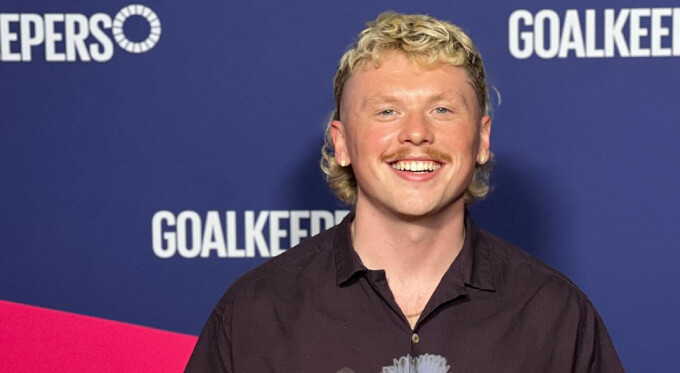
Doddz built his career on making art behave in ways it is not supposed to.
The augmented reality artist, creative director and founder of immersive studio DIME first made his name as street artist Professor Pigment, creating public murals before one early commission helped him pay off his parents’ mortgage while he was still a student. He later moved through digital marketing at SocialChain, became Creative Manager during the company’s rapid rise, and went on to launch DIME in 2019.
His work now sits at the collision point of art, technology and emotion. Doddz has created immersive experiences for brands including Disney, Nike, Sony, Amazon, Dior and The Beatles, served as an ambassador for Meta and Snapchat, and was named UK Leading Digital Voice for the Queen Elizabeth Memorial Committee.
In this interview with the AI Speakers Agency, Doddz discusses how mixed reality is changing storytelling, why AI should be treated as a creative tool rather than a replacement for imagination, and why the best work still depends on making people feel something.
Question 1. How does the audience relationship to a story change when physical work is extended through digital and mixed-reality layers?
Doddz: “There’s a couple of advantages I see personally. I love the ability to have a physical piece of art or object that helps ground this wider story in reality, in realism, but then being able to overlay a digital experience and have that object or artwork do something that is impossible, but happening before your very eyes.
“A lot of the stories that I try to tell are about wonder and a moment of awe. A lot of people haven’t experienced stories like this, and to use these technologies allows you to get those moments.
“In terms of storytelling, having an interactive experience also allows a story to not be a linear set path, something that you observe. It then changes to become a story that you can be involved in, feel more immersed in, and actually dictate how that story pans out.
“So the emotional connection you start getting between audience, story and me as an artist, or with a brand, just raises quite a lot.”
Question 2. In AI-assisted creative work, how do you keep emotion at the centre?
Doddz: “I think everything that I try to do is rooted in emotion.
“The tech allows you to tell stories or evoke emotions in new and interesting ways, but I like to see AI and tech in general as a paintbrush. It’s a tool. You have to apply it creatively. You have to have the imagination to apply this technology in new and interesting ways.
“Just in the way that you can’t use a paintbrush and just evoke emotion. You have to have that idea, that concept. Even though we’re surrounded by technology and specifically AI, emotion is all any audience actually cares about.
“Even if you had a terrible piece of art or experience, if they’d somehow captured an emotion, it would still resonate and you would still remember it more than just the most beautiful piece of AI-generated work.
“So, I like to think of tech as tools and making sure that what should happen is that the tech dissolves into the background and all the audience is focusing on is the emotion.”
Question 3. What is AI forcing creatives and businesses to reconsider about the creative process?
Doddz: “It feels like we’re in a period of a fundamental shift into how to think as a creative. It lowers the barrier of entry for the speed of experimentation and also the creative output. And that’s good and bad.
“It’s bad in the fact that there’s a lot of low-quality work now pouring out more content and experiences than ever before, for better or for worse. But if you can harness that tech, even as an independent artist, you’re now having the ability to create some pretty amazing things.
“It feels like as a creative you have to go back to first principles. All of the creative decision-making or things that you think you know about being creative are all based in a reality that was pre-AI, and now you have to start thinking, well actually, why am I doing it like this? Is there a different way of doing it? Is there a different application or interactive experience from this?
“I have this example of an artwork called the house and it’s a painting of a couple buying their first home and you hold your phone up to it and you can see inside the house and their lives live out in real time. So you grow old with them and AI generates new textures for different clothing and different assets within that 3D experience.
“So that’s coming from a point of what does an artwork look like and feel like in a world in AI? You’re going to go back to what a painting is as you typically would experience it, but now that there’s a whole new world that you can come up with a new way to experience a painting.
“I like to use that as an example because I feel like it’s a painting for the modern age.”
Question 4. Why does AI trigger fears about creative work losing its soul, and how should artists and brands respond?
Doddz: “AI is presented as a tool for efficiency. So, there’s an understandable moment of angst if you’re a VFX artist or a photographer or a drone pilot or something like that, that you think that your job is going to get replaced.
“It feels, as I was saying earlier, about a fundamental shift in the way that painters were scared of the camera when that came around and then the motion picture frightened photographers.
“These aren’t tools that are going to decimate the landscape and no one will ever hire another human again. That’s not going to happen. But it is going to carve out a whole new way of working that will upset some of those industries as it has done throughout history and will continue to do so.
“In terms of avoiding that fear, the train has already left the station really. You kind of have to embrace it.
“You have to have this natural curiosity. It’s not saying that you have to be at the forefront trying every single new tool because there’s a hundred thousand a week it feels like, but just having one eye on that and really if it doesn’t interest you, that’s fine.
“But finding an avenue in which you can use it to apply it in. If you’re thinking about AI, there’s automation or image generation, but there are different ways to use these tools that might fit your interests or creativity.
“It’s a difficult question to answer because if you’re not involved then you’re going to feel like you’re quite far behind.”
This exclusive interview with Doddz was conducted by Tabish Ali of the Motivational Speakers Agency.




