Businesses Are Looking at LED Displays Differently Than They Were Five Years Ago
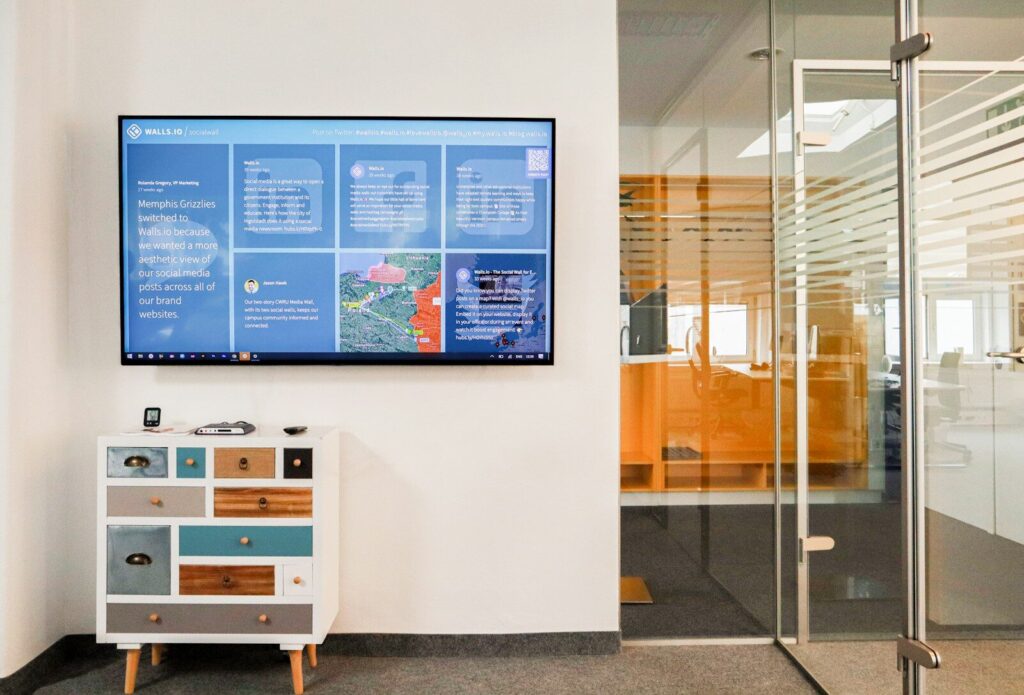
Commercial LED displays are no longer reserved for stadiums and flagship retail stores. As costs fall and technology improves, businesses across a wide range of sectors are taking another look at what digital displays can offer.
Five years ago, many businesses wouldn’t have considered an LED display unless they were planning a major installation.
They were seen as specialist products. Expensive. Complicated. Better suited to sports venues or city-centre advertising than an office reception or university building.
That perception has shifted.
Walk into a newly refurbished dealership, a shopping centre or even a modern corporate headquarters and there’s a good chance the first thing visitors see is a digital display rather than a printed sign. Information changes instantly. Promotions can be updated in seconds. Welcome messages no longer need to be printed every time a visitor arrives.
It’s a small change on the surface, but it reflects a much wider shift in how organisations communicate.
The Conversation Has Changed
Suppliers across the commercial AV industry say buyers are asking different questions today than they did only a few years ago.
Instead of simply requesting a quotation for “an LED screen”, many arrive with a shortlist of technical questions already prepared.
What pixel pitch is suitable?
How bright does the display need to be?
Will it be visible in direct sunlight?
Can individual panels be replaced if something fails?
Those aren’t questions that were commonly being asked a decade ago.
Businesses are spending more time researching before they invest, largely because there’s far more information available than there used to be. Decision makers want confidence that what they’re buying today will still perform well several years from now.
It’s Rarely Just About Price
The cheapest quotation doesn’t always win.
That isn’t because businesses suddenly have larger budgets. It’s because many have experienced what happens when display technology isn’t matched to the environment in which it’s installed.
An outdoor screen that’s difficult to read in bright sunshine quickly becomes an expensive mistake. Equally, specifying a display with a finer pixel pitch than the project actually requires can add unnecessary cost without delivering any meaningful benefit.
The specification matters just as much as the product itself.
That’s changing the way organisations compare suppliers.
Rather than collecting prices from several companies and making a decision purely on cost, buyers are increasingly seeking practical advice before committing.
Different Environments Need Different Solutions
A reception area has very different requirements from a roadside advertising display.
Universities often need displays that remain clear when viewed from relatively close distances. Retailers may prioritise colour accuracy and brightness to help promotions stand out in shop windows. Hotels and conference venues usually want systems that can cope with constantly changing schedules without creating extra work for staff.
Trying to solve all of those challenges with exactly the same specification rarely produces the best result.
That’s why display selection has become far more application-led than product-led.
Manufacturers Have Changed the Market
It’s easy to focus on falling prices, but that only tells part of the story.
Manufacturing standards have improved significantly over recent years. Displays are brighter, cabinets are lighter and image quality continues to improve as finer pixel pitch technology becomes more widely available.
Reliability has improved too.
Modular cabinet designs mean damaged sections can often be replaced individually rather than replacing an entire display, making long-term ownership considerably more practical than it once was.
For businesses investing in technology expected to remain in service for many years, that’s an important consideration.
Experience Still Matters
Despite the amount of information now available online, most commercial projects still benefit from experienced technical advice.
Every installation is different. Viewing distance, ambient light, mounting positions, content type and future expansion all influence which display is likely to perform best.
Businesses comparing commercial LED display systems are increasingly consulting specialist suppliers before making a final decision. Companies such as Pixel Logic Solutions are finding that buyers arrive better informed than ever before, but still value practical guidance that reflects how a display will actually be used rather than simply comparing product specifications on paper.
Looking Ahead
There is little sign that demand for commercial LED displays is slowing.
Retail continues to invest in digital customer experiences. Universities are modernising teaching spaces. Hospitality venues are replacing static signage with systems that can be updated instantly. Corporate workplaces are rethinking how they communicate with staff and visitors.
Perhaps the biggest change, however, isn’t the technology itself.
It’s the way businesses think about it.
Commercial LED displays are no longer viewed as specialist equipment reserved for landmark projects. Increasingly, they’re becoming another business tool—one that’s expected to work reliably every day, adapt as organisations change, and deliver value long after the initial installation is complete.




