Energy Tech’s Next Big Challenge is Security & Volatility
By Chris Kimmett, CEO, Odqa
The latest energy crisis has reinforced a lesson industry has now learned repeatedly. Energy security is no longer simply a question of keeping the lights on. It has become a question of business resilience.
In the weeks since the Iran conflict began, Brent crude surged by more than 55% from its pre-war level, peaking near $120 a barrel. The Strait of Hormuz, through which around 20% of global oil trade normally flows, has been functionally closed, while the European Union has spent an additional €24 billion on fossil fuel imports since the conflict began.
The immediate response has been familiar: strategic oil reserves, support for electrification, investment in renewable electricity and renewed debate around energy independence.
Yet one of industry’s largest energy challenges remains largely outside the conversation.
Industrial heat.
The technology gap hiding in plain sight
Heat accounts for roughly half of global energy consumption, and for many heavy industries it remains overwhelmingly dependent on fossil fuels. In sectors such as cement, alumina refining and ceramics, process heat is not a secondary utility; it is fundamental to production and one of the largest operating costs.
When oil and gas prices spike, the consequences extend far beyond motorists and household energy bills. They directly affect the economics of manufacturing the materials that modern economies rely upon.
Perhaps more importantly, these shocks are no longer isolated events.
Over the past six years the world has experienced repeated disruptions to energy markets, from the collapse and rebound of oil prices during COVID-19, through Russia’s invasion of Ukraine and Europe’s gas crisis, to supply disruption in Venezuela and the latest conflict in the Middle East. Different causes have produced the same commercial outcome: sudden increases in industrial energy costs.
For industries investing in facilities designed to operate for decades, repeated exposure to volatile fuel markets is becoming a strategic challenge rather than a temporary inconvenience.
From fuel dependence to technology innovation
This is where industrial energy technology is beginning to evolve.
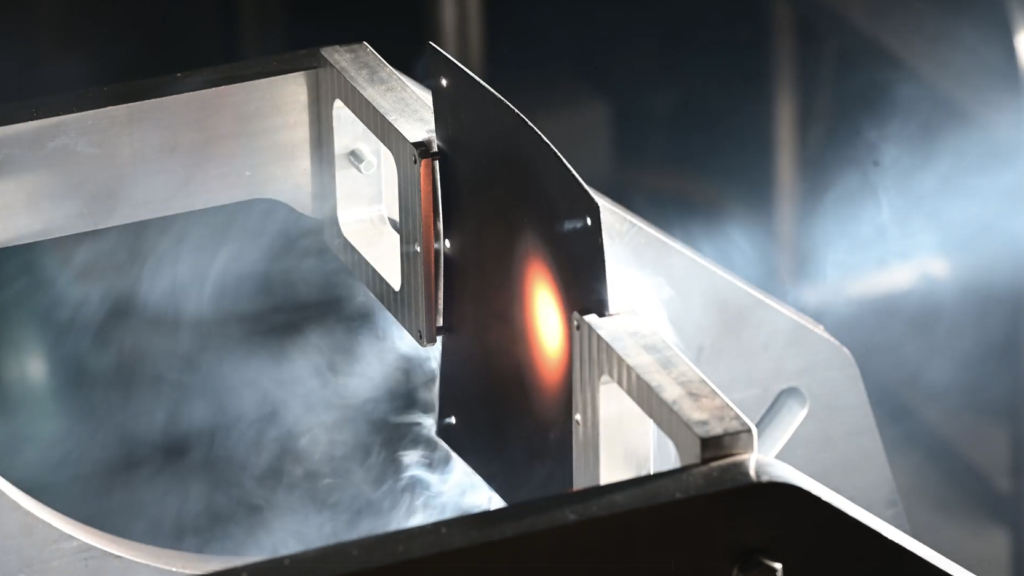
Concentrated solar thermal systems are designed to generate industrial process heat using sunlight rather than combustion. Capable of delivering temperatures from around 400°C to above 800°C, the technology is suitable for many industrial processes that have historically relied on natural gas or other fossil fuels.
The significance lies not only in decarbonisation.
It changes the economics of industrial energy.
Instead of continuously purchasing fuel whose price is determined by global commodity markets, businesses invest upfront in an asset that produces heat with no ongoing fuel price exposure. Once installed, heat production becomes a largely fixed operating cost, reducing dependence on fluctuations in oil, gas and carbon markets.
Over the lifetime of an industrial asset, some of the greatest financial benefits may come not during stable markets, but during periods of geopolitical disruption when fuel costs rise sharply and margins come under pressure.
Why now?
Industrial heat is also moving higher up the policy agenda.
The European Union’s AccelerateEU plan explicitly identifies solar thermal alongside electrification and geothermal as part of its response to energy insecurity, signalling that technologies capable of supplying industrial heat without fossil fuels are becoming part of mainstream energy policy.
At the same time, many of the world’s most energy-intensive industries are located in regions with excellent solar resources, including parts of North Africa, Southern Europe, Australia and Chile. That geographical alignment creates an opportunity to rethink how industrial heat is generated rather than simply how fuel is sourced.
A different approach to energy security
Every energy crisis prompts businesses to hedge fuel purchases, diversify suppliers and look for short-term protection from volatile markets.
Those responses remain important.
But they do not change the underlying problem: many industrial businesses continue to depend on fuels whose price is determined by events entirely beyond their control.
Technologies such as concentrated solar thermal offer a different approach. Rather than managing fuel price volatility, they aim to remove it from part of the operating model altogether.
That represents more than another clean energy innovation. It reflects a broader shift in how industrial companies think about energy security, operational resilience and long-term competitiveness.
If the past six years have demonstrated anything, it is that energy market disruption is no longer exceptional. As businesses rethink how they build resilience for the decades ahead, technologies that reduce structural exposure to fuel markets may become as important as technologies that improve efficiency or reduce emissions.




