3D Printing Helps Power Next Generation of Autonomous Water-Cleaning Robots
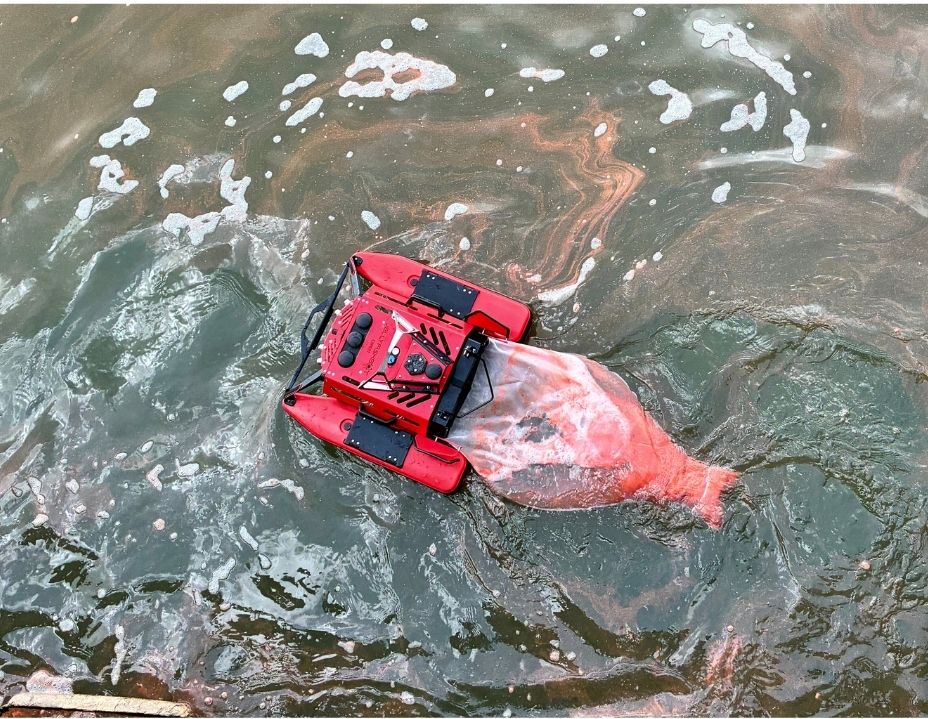
Sculpteo’s industrial 3D printing technology is helping French robotics company IADYS manufacture autonomous robots designed to remove floating waste and oil from waterways around the world.
As autonomous robotics continues to tackle real-world environmental challenges, advanced manufacturing is playing an increasingly important role behind the scenes. One of the latest examples comes from France, where industrial 3D printing specialist Sculpteo is helping bring autonomous water-cleaning robots into production.
The Paris-based additive manufacturing company has announced its collaboration with robotics firm IADYS, which develops autonomous surface-cleaning robots capable of removing floating waste, hydrocarbons and other pollutants from rivers, marinas, ports and industrial waterways.
The partnership highlights how additive manufacturing is enabling robotics companies to produce highly specialised components quickly, accurately and cost-effectively, without the need for expensive traditional tooling.
3D-printed components designed for harsh environments
IADYS has turned to Sculpteo’s industrial 3D printing services to manufacture several functional components used within its robotic platforms, including threaded net standoff fasteners that secure and guide the collection net positioned at the rear of each robot.
For these components, Sculpteo selected its PA12 S material, a high-performance nylon developed for demanding industrial applications.
The material combines strong mechanical properties with excellent chemical resistance, making it particularly well suited to marine environments where equipment is regularly exposed to seawater, oils, fuels and other aggressive substances.
Unlike many traditional polyamide materials, PA12 S also demonstrates low and stable water absorption, helping components retain their dimensional accuracy even after prolonged immersion. This consistency is particularly valuable for autonomous robots expected to operate reliably in demanding outdoor conditions.
Combined with the precision offered by industrial additive manufacturing, the material enables IADYS to produce durable functional parts while remaining economically viable for small and medium production runs.
Supporting scalable robotics manufacturing
As autonomous robots become more widely deployed across environmental, industrial and infrastructure sectors, manufacturers are increasingly seeking production methods that allow rapid design iteration without sacrificing consistency or quality.
According to IADYS, additive manufacturing has provided exactly that balance.
Nicolas Carlési, CEO and Founder of IADYS, said:
“Working with Sculpteo has been a real asset for series production: consistent quality, scalable tooling, and a smooth, reliable manufacturing workflow.”
The collaboration demonstrates how industrial 3D printing has evolved beyond rapid prototyping to become an integral part of end-use manufacturing, particularly for specialist robotics applications where production volumes may not justify conventional injection moulding.
Robotics tackling environmental pollution
Founded in 2016 near Marseille, IADYS develops autonomous robotic systems focused on protecting aquatic environments.
Its flagship product range includes the Jellyfishbot, Jellyfishbot Expert and Mobile Oil Skimmer, which are capable of collecting floating litter, plastics and oil while also monitoring water quality.
Today, the company’s robots operate in more than 25 countries, supporting environmental clean-up projects in ports, marinas, industrial facilities and public waterways.
As global demand grows for automated environmental monitoring and pollution control technologies, manufacturers increasingly rely on advanced digital manufacturing techniques to accelerate product development while maintaining production quality.
Alexandre d’Orsetti, CEO of Sculpteo, said:
“Beyond this project, IADYS is driven by a long-term mission to deploy autonomous robotic systems that address environmental challenges at scale. Each project contributes to building more reliable, efficient, and field-ready solutions with tangible real-world impact. As a result, at Sculpteo, we are proud to contribute to the development and production of these robots, supporting IADYS in turning its mission-driven innovations into reliable, real-world solutions deployed at scale.”
Additive manufacturing continues to mature
The partnership also reflects the wider evolution of additive manufacturing from a prototyping technology into a mainstream production tool for advanced engineering sectors including robotics, aerospace, healthcare and automotive manufacturing.
Founded in 2009, Sculpteo provides industrial online 3D printing services using more than 75 materials and finishing options for businesses worldwide. The company became part of BASF New Business in 2019 before joining the 3D Prod Group earlier this year, further strengthening its position within the industrial manufacturing sector.
As robotics and automation continue to address environmental and industrial challenges, collaborations such as this demonstrate how digital manufacturing is helping innovators bring increasingly sophisticated technologies from concept to commercial deployment faster than ever before.
Further information:
- Sculpteo – https://www.sculpteo.com
- IADYS – https://www.iadys.com
- Collaboration case study – https://www.sculpteo.com/en/resources/customer-stories/iadys/




