‘The Language Barrier Has Disappeared’: Gil Baram on AI-Driven Cyberattacks

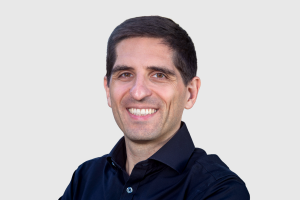
Gil Baram is a cybersecurity strategist, academic and adviser whose work examines the relationship between emerging technology, national security and geopolitical power. She is a Senior Lecturer at Bar-Ilan University and a former Fulbright Cybersecurity Postdoctoral Fellow at Stanford University.
Gil previously held cyber intelligence roles within Israel’s National Information Security Authority and led the Cyber and Space Research Group at Tel Aviv University. She also holds research positions at UC Berkeley and Nanyang Technological University, combining operational experience with international research into cyber warfare, AI-driven threats and state behaviour.
In this exclusive interview with the Cyber Security Speakers Agency, Gil explains how AI is accelerating cyberattacks, why accountability and transparency must guide its use, and how cyber capabilities have become instruments of power and deterrence.
Question 1: How is AI altering the speed, scale and capability of modern cyberattacks?
Gil Baram: “We need to go back and remember that many researchers thought or estimated that, when AI was used, we would see new types of cyberattacks. Something completely new that we had not seen before, maybe a catastrophic one involving new methods and techniques. That was how many people anticipated it.
“The interesting thing is that we have not seen something like that yet. We do, however, see a change in both speed and scale.
“The speed of attacks is getting much faster because many parts of the attack kill chain are being automated by AI. Some parts that used to take several days or hours of human work are now taking minutes. That changes a lot.
“We also see a big change in the scale of attacks. Even nation-state attackers, such as those from North Korea, are getting better in two ways.
“One is that the language barrier basically does not exist anymore. Before the use of AI, countries such as North Korea had to use Google Translate. The translation was not as good, and it was easier to identify phishing emails or scams. They have improved and now produce perfect English. That has enabled a larger scale.
“They have also improved their use of technology. We have seen reports from Google and OpenAI describing how nation-state actors are using large language models to learn new coding and attack techniques. They are getting better, so the scale is larger than before.”
Question 2: Which governance principles are essential when deploying AI within cyber systems?
Gil Baram: “The two most important principles are accountability and transparency.
“Human beings are still accountable for what is happening, the results and how the technology is used. That comes hand in hand with transparency.
“We have to be transparent about what goes into the machine, what comes out and how we use it.
“We can use AI for many things, but we have to ask whether we want to do that. Do we want to take the human perspective out and put artificial intelligence in its place?
“These are the main principles as I see them.”
Question 3: Why should cyber risk be understood as an instrument of geopolitical power?
Gil Baram: “Cybersecurity has had a geopolitical basis for a long time.
“We tend to look at cyber and AI as primarily technical subjects. We think, “If I’m not a computer scientist, maybe I’m not the one who should understand what’s going on.”
“The truth is that offensive cyber capabilities have been used for years by nation-states and non-state actors. They are tools of power and deterrence, extending far beyond technical functions.”
Question 4: What should non-technical audiences understand about the role of cyber and AI in everyday life?
Gil Baram: “My passion and goal is for audiences to realise that cyber, AI and cyber threats are relevant to our everyday lives.
“They are not simply something out there that we read about in the news. They are relevant to daily life.
“We do not have to be technical people to understand these threats or protect ourselves. That is my main message.”
This exclusive interview with Gil Baram was conducted by Tabish Ali of the Motivational Speakers Agency.