Router Privacy Study Finds Major Transparency Gaps Across Leading Wi-Fi Brands
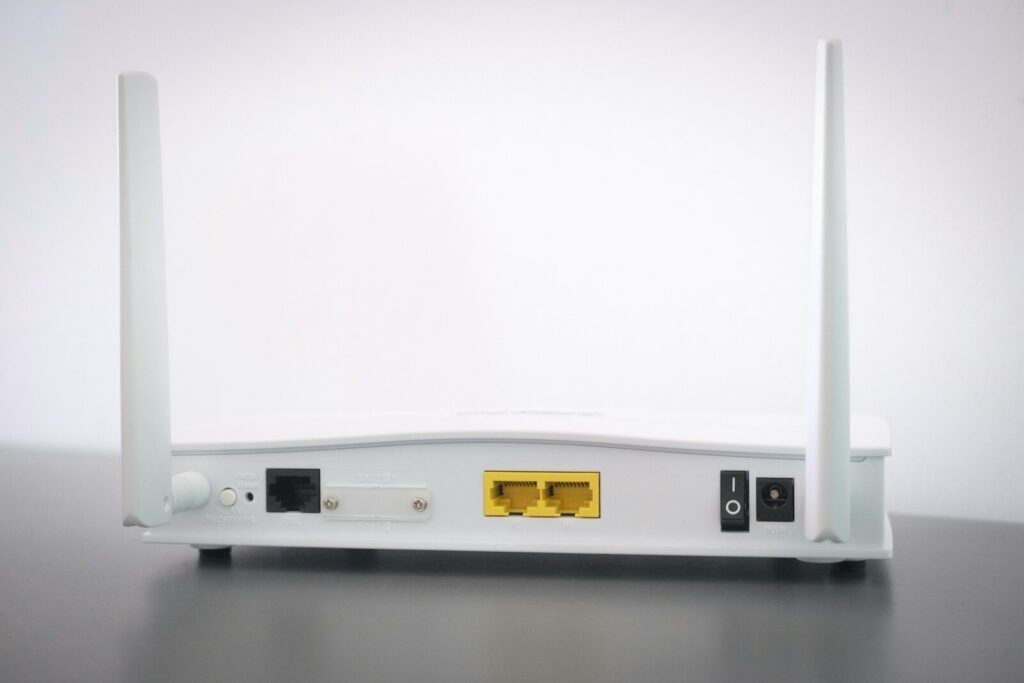
Consumers may have little idea how much information their home routers could collect about them, with new research finding widespread gaps in privacy disclosures across some of the world’s biggest networking brands.
A new Router Privacy Index from the Cybernews research team examined the publicly available privacy policies of 25 consumer router providers, looking at how clearly manufacturers explain their handling of information ranging from personal details and device data to DNS requests, network traffic and location information.
The researchers found that none of the 25 manufacturers clearly stated whether they log DNS requests, while many relied on broad company-wide privacy policies rather than documentation explaining specifically what their router hardware collects.
That matters because a router sits at the centre of the modern connected home, handling traffic from laptops and smartphones as well as smart televisions, security cameras, speakers and other Internet of Things (IoT) devices.
All 25 Brands Failed To Clarify DNS Logging
One of the most significant findings concerned Domain Name System (DNS) requests.
DNS translates familiar website addresses into the numerical IP addresses computers use to communicate. Records of DNS requests can potentially reveal the domains being accessed by devices on a network and, over time, provide information about online activity.
Cybernews found that all 25 companies received a “Not Specified” classification for DNS request logging because their reviewed policies neither clearly confirmed nor ruled out the practice.
Importantly, the finding does not mean that all 25 manufacturers are logging customers’ DNS activity. Rather, researchers said the privacy documentation they examined did not provide enough information to determine whether it happens.
That distinction is central to the research, which examined what manufacturers disclose rather than technically testing what individual routers actually do.
Personal Details More Clearly Disclosed
Manufacturers were considerably clearer when describing their collection of conventional personal information.
The study found that 84% of the brands explicitly disclosed collecting email addresses and the same proportion collected account names. Almost half – 12 of the 25 companies – disclosed collecting all four of the personal information categories examined: name, email address, telephone number and postal address.
The researchers identified a sharp contrast between those disclosures and information about activity occurring within a home network.
For example, 20 of the 25 providers did not specify whether their routers conduct deep packet inspection (DPI) of local network traffic. Google Nest and Ubiquiti Cloud were identified as explicitly stating “No”, while Amazon Eero, MSI Radix and AT&T Turbo Hotspot were classified as collecting relevant data conditionally, depending on configuration.
DPI can be used for legitimate purposes including network management, security and traffic classification. Depending on its implementation and whether communications are encrypted, however, it can potentially reveal considerably more information about network activity.
Location Data Raises Further Questions
Location information emerged as another area where the study found inconsistent disclosures.
Seven of the providers were classified as explicitly collecting precise device location information, six were found to collect it conditionally and 12 did not specify their position. None of the 25 was classified as explicitly ruling out collection altogether.
The research also examined nearby Wi-Fi network identifiers, known as SSIDs and BSSIDs. Nineteen manufacturers did not specify whether these were collected, four were classified as collecting them partially or conditionally, and two – D-Link and Amazon Eero – were classified as confirming collection.
Such information can potentially contribute to location estimation when combined with databases mapping Wi-Fi access points.
Broad Privacy Policies Make Comparison Difficult
Cybernews said one of the fundamental problems facing consumers was manufacturers’ reliance on broad privacy policies covering multiple products and services.
A single corporate policy might apply to an online shop, smartphone application, cloud services, smart-home equipment and networking hardware.
As a result, consumers can struggle to determine whether a particular data-collection practice applies to the router itself or only to another part of the manufacturer’s ecosystem.
In some cases, researchers also found that potentially relevant privacy information was difficult to access before a consumer bought, registered or configured the product.
That potentially creates a problem for anyone attempting to compare the privacy implications of different routers before deciding which one to buy.
Study Assessed Policies, Not Router Behaviour
The researchers created a scoring methodology covering 22 data points across six areas: browsing and web traffic, personally identifiable information, device inventory and mapping, location and spatial data, hardware fingerprinting, and security and smart telemetry.
However, the findings need to be interpreted carefully.
This was a privacy-policy and disclosure study, not a technical security audit. Researchers did not reverse-engineer router firmware, inspect network traffic or independently determine what information manufacturers’ servers actually receive.
A high score therefore should not be interpreted as proof that a manufacturer secretly collects large quantities of customer data, while a lower score does not prove that a router provides stronger privacy in real-world use.
The researchers specifically noted that some scores were increased by ambiguity in corporate privacy documentation rather than evidence of malicious or excessive data collection.
What Can Router Owners Do?
For consumers concerned about router privacy, the findings highlight the value of looking beyond headline specifications such as Wi-Fi speed and coverage.
Cybernews recommends favouring equipment that offers local management without requiring continuous cloud connectivity for basic functions and checking whether a manufacturer provides a dedicated router privacy policy before buying.
Users can also review cloud and remote-management features, disable services they do not need, examine administrator accounts and connected devices periodically, and keep router firmware updated.
Encrypted DNS technologies such as DNS over HTTPS (DoH) and DNS over TLS (DoT) can provide additional privacy, although they do not prevent a router from seeing other information about connected devices and network activity.
A VPN can similarly reduce the amount of browsing-destination information visible to the local network, but it cannot prevent the router itself from observing information such as connected devices, connection timing, data volumes and diagnostic information.
The wider issue highlighted by the research is therefore not simply how much data routers collect, but how difficult it can be for consumers to establish exactly what happens to their information in the first place.
Cybernews’ findings suggest that greater product-specific disclosure could make it considerably easier for buyers to understand and compare the privacy implications of the devices sitting at the centre of their connected homes.




