Understanding Voltage, Current and Resistance in Electrical Maintenance
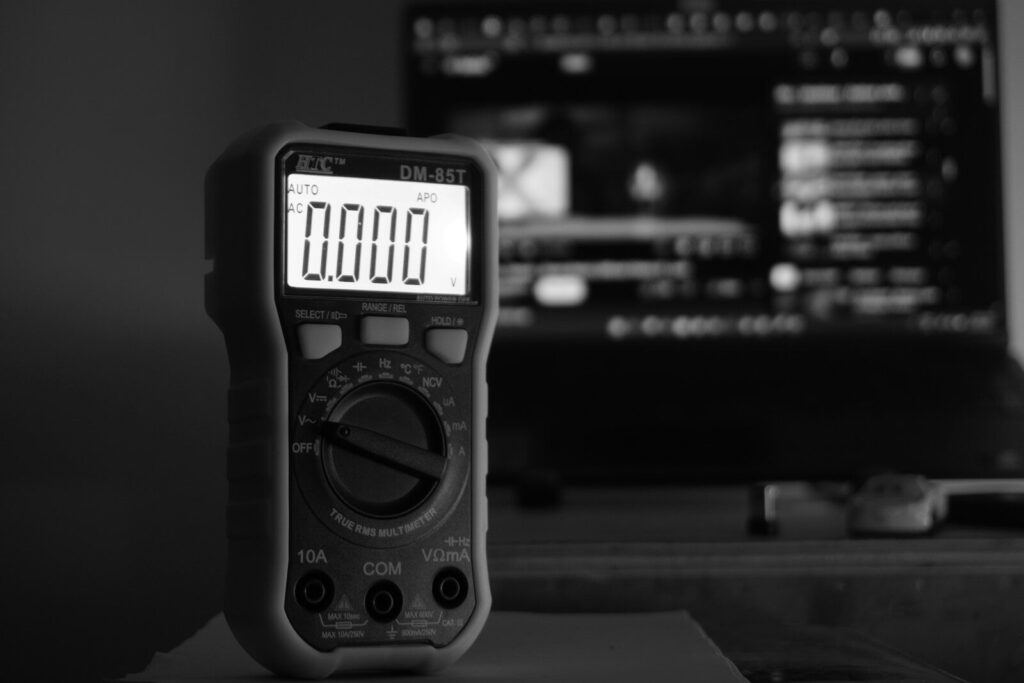
Grasping the specifics and nuances of how voltage, current, and resistance relate to each other is of the utmost importance for ensuring effective electrical maintenance.
These three fundamental quantities form the backbone of every circuit. Maintenance professionals typically turn to digital multimeters to help them measure these key parameters. This process allows for the more informed identification of potential faults, the verification of circuit performance, and better support for troubleshooting.
Still, there are some aspects of voltage, current, and resistance that aren’t always immediately or easily understood. So, here are some of the essentials to know.
An Introduction to Voltage
Measured in volts (V), voltage is the electrical potential difference between two points in a circuit. It can be characterised as providing the driving force that causes current to flow through a circuit, presuming a complete conductive path is available.
With regard specifically to electrical maintenance work, technicians routinely check voltage to help them establish whether equipment is receiving the electrical supply it is supposed to be receiving.
Unexpectedly low or absent voltage could be an indicator of a supply problem, wiring damage, a faulty connection, or component failure.
An Introduction to Current
Current, measured in amperes (A), is the rate at which electric charge flows past a point in a circuit through a conductor. It is the quantity that actually does the work of, for example, heating elements, lighting lamps, or driving motors.
The amount of current flowing depends on such factors as the applied voltage and the resistance of the circuit. Maintenance professionals, then, can gain useful information from the monitoring of current in electrical equipment.
If current is found to be higher than anticipated, this could be a sign of excessive loading or a fault. Insufficient current, meanwhile, may leave equipment underperforming; this, too, could warrant investigation of the supply or circuit to determine the cause.
An Introduction to Resistance
Resistance is measured in ohms (Ω) and is best described as the opposition to the flow of electric current. While at least some resistance exists in every conductor and component, the exact amount will depend on the material, dimensions, and temperature of the conductor or component.
Resistance measurements can be very useful and relevant for electrical maintenance, given how they can help identify problems such as damaged components, poor connections, or breaks in a circuit.
Continuity testing and insulation resistance testing are the core maintenance tasks here. Resistance testing should normally be undertaken with the relevant circuit safely isolated and de-energised; it may also be necessary to discharge components such as capacitors prior to testing.
The Role That Ohm’s Law Plays
The three quantities of voltage, current, and resistance are linked by Ohm’s Law.
The relationship can be expressed as V = I x R, with V referring to voltage, I to current, and R to resistance. This formula can be rearranged if two quantities are known but the remaining one needs to be determined.
For example, in the event of a particular circuit having a voltage of 12 V and a resistance of 6 Ω, its current would be 2 A.
When technicians have a strong understanding of this relationship, they can be well-placed to assess whether measured values are consistent with the behaviour they would typically expect from the given circuit.
From there, they will be able to narrow down the possibilities for what could be causing a particular fault.
Final Thoughts: A Seemingly Simple Relationship, But A Vital One
Possessing the required knowledge of the fundamental distinctions and connections between voltage, current, and resistance, then, can greatly empower electrical maintenance professionals to be more impactful in their work.
That will include being advantageously positioned to get the best out of their electrical testing equipment, and to more confidently investigate faults, verify performance, and support electrical systems’ reliable operation.




