From Boundary Wires to Virtual Maps: The Evolution of Robot Lawn Mowers
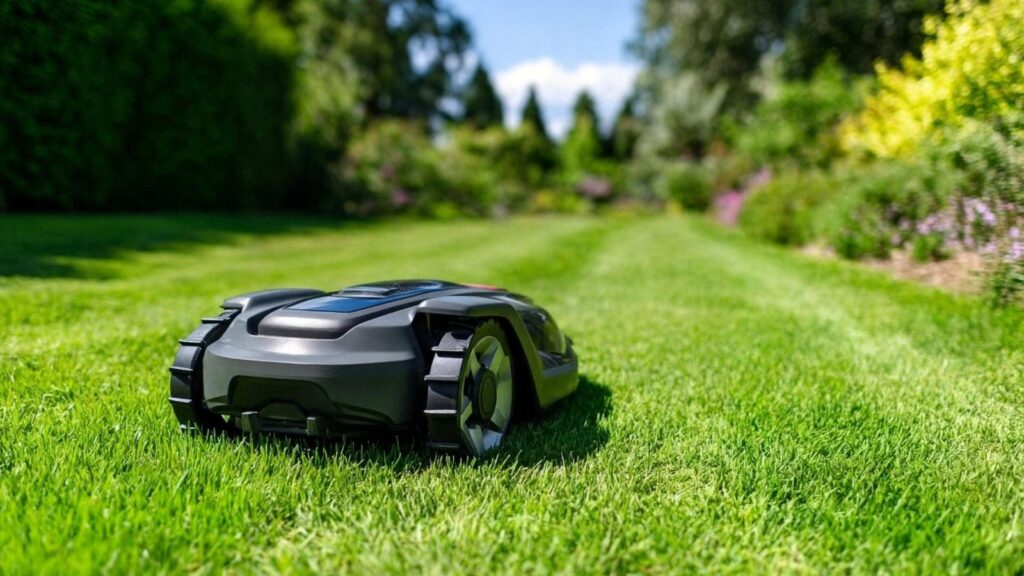
For years, the basic idea behind a robot mower barely changed. The machine would leave its charging station, cut the grass within a predefined area and return home when it needed more power. Clever, certainly, but still heavily dependent on something decidedly low-tech: a wire buried or pegged around the edge of the lawn.
That wire did one job very well. It told the mower where to stop.
What has changed more recently is the way manufacturers think about that boundary. Instead of physically marking the garden, newer machines can increasingly create a digital version of it. The lawn becomes a mapped space, exclusion zones can be set in software and satellite-based positioning helps the mower understand where it is with much greater precision.
It is a small example of a much bigger shift in consumer technology. Physical controls are being replaced by software, fixed installations by virtual settings, and simple automation by machines that are expected to interpret their surroundings.
The old perimeter-wire system is still far from obsolete. In fact, one reason it has lasted so long is because it is simple and dependable. Once the wire is installed correctly, the mower has a clear working area and does not need to understand the garden in any sophisticated way. It detects the signal, changes direction and carries on cutting.
For uncomplicated lawns, that can be entirely sufficient.
The problems start when the garden stops being uncomplicated. Real gardens have islands of planting, curved borders, narrow passages, separate lawn areas, paths, trees, sheds and all sorts of features that make a neat perimeter difficult to define. The more complex the layout becomes, the more carefully the wire needs to be planned.
Installation can therefore become a project in itself. Move a flower bed, change the edge of the lawn or carry out landscaping later and the system may need altering. A damaged section of wire can also stop the mower working correctly until the fault has been located and repaired.
That inconvenience created an obvious opportunity for another approach: remove the wire completely.
This is where RTK technology enters the picture. Real-Time Kinematic positioning works alongside satellite navigation to provide a much more accurate location than standard GPS alone. That extra precision matters because a robot mower cannot afford to be several metres out. It needs to know whether it is on the lawn, beside the lawn or halfway into a flower bed.
With sufficiently accurate positioning, the garden can be defined virtually. Instead of installing cable around the perimeter, the user maps the working area digitally and tells the mower where it is allowed to operate.
The practical difference is significant.
A physical boundary is fixed until someone physically changes it. A virtual one can be adjusted through software. That means a homeowner can alter mowing areas, create no-go zones or change the way different sections are handled without digging anything up.
This is especially useful in gardens that evolve over time. A newly seeded patch can be temporarily excluded. A new play area can be added to the map. A lawn divided into several zones can be managed in separate sections. What was once a hardware problem becomes a settings problem.
The change also affects how the mower moves.
Many traditional machines operate in a relatively random pattern. They travel across the lawn, turn when they encounter the boundary and gradually achieve coverage through repeated passes. It works, but it is not particularly elegant.
More advanced navigation allows some newer machines to work in a more structured way. They can follow planned routes, cut in lines and move between defined zones with more purpose. The result is a machine that behaves less like a device bouncing around within a fenced area and more like something that actually understands where it is going.
That does not mean newer automatically means better.
RTK systems depend on reliable positioning, and that can be affected by the environment. Dense trees, tall buildings and other obstructions can interfere with satellite visibility. A beautifully mapped virtual lawn is not much use if the machine struggles to maintain an accurate fix in the parts of the garden where it needs to work.
That is why choosing between wired and wire-free systems still requires some thought. Retailers such as Garden Machinery Direct make the distinction particularly relevant for owners of complex gardens, because the shape of the lawn is only one factor. Satellite visibility, separate mowing zones, narrow sections and surrounding obstacles all influence which system is likely to work best.
In some properties, a traditional wired mower may remain the safer and more predictable choice. In others, installing a boundary cable around a complicated layout may seem unnecessarily awkward when a virtual map can do the same job more flexibly.
The interesting point is that the decision is no longer simply about cutting performance. It is about navigation architecture.
Robot mowers are also becoming more aware of what happens inside the mapped area. Knowing the boundary is only half the challenge. A garden is rarely static. Toys get left on the grass, chairs are moved, branches fall and pets wander through.
Obstacle detection is therefore becoming increasingly important. Newer machines may use sensors, cameras or other detection systems to recognise objects and alter their route accordingly. That brings robotic mowing closer to the wider world of autonomous machines, where success depends not only on knowing the destination but on reacting to unexpected conditions along the way.
Smartphone control adds another layer.
What used to be a fairly self-contained piece of garden equipment is now becoming part of the connected-home environment. Owners can increasingly change schedules, adjust zones, review status information and alter cutting preferences through an app.
In practical terms, this means lawn care is beginning to resemble the way people already manage heating, lighting or security systems. The mower becomes another connected device operating according to software-defined rules.
That is perhaps the most interesting part of the transition.
The physical job has not changed. Grass still grows and still needs cutting. What has changed is the intelligence surrounding the task.
The first generation of robot mowers automated labour. The newer generation is increasingly automating decisions as well. It can know where it is, recognise where it should not go and adapt its movement according to a digital map.
Boundary wires will continue to have a place because reliability matters more than novelty. For many gardens, they remain a proven and perfectly sensible solution. Yet the direction of travel is clear. Software, positioning and environmental awareness are becoming more important with each generation.
The evolution from buried cable to virtual maps therefore says as much about consumer robotics as it does about gardening. Technology that once sounded specialised — precision satellite correction, automated route planning and digital zoning — is now being used to keep domestic lawns tidy.
That makes the humble robot mower a surprisingly good illustration of where everyday automation is heading: fewer physical constraints, more software, and machines that are expected to understand the spaces in which they work.




