Intrinsically safe technology recap
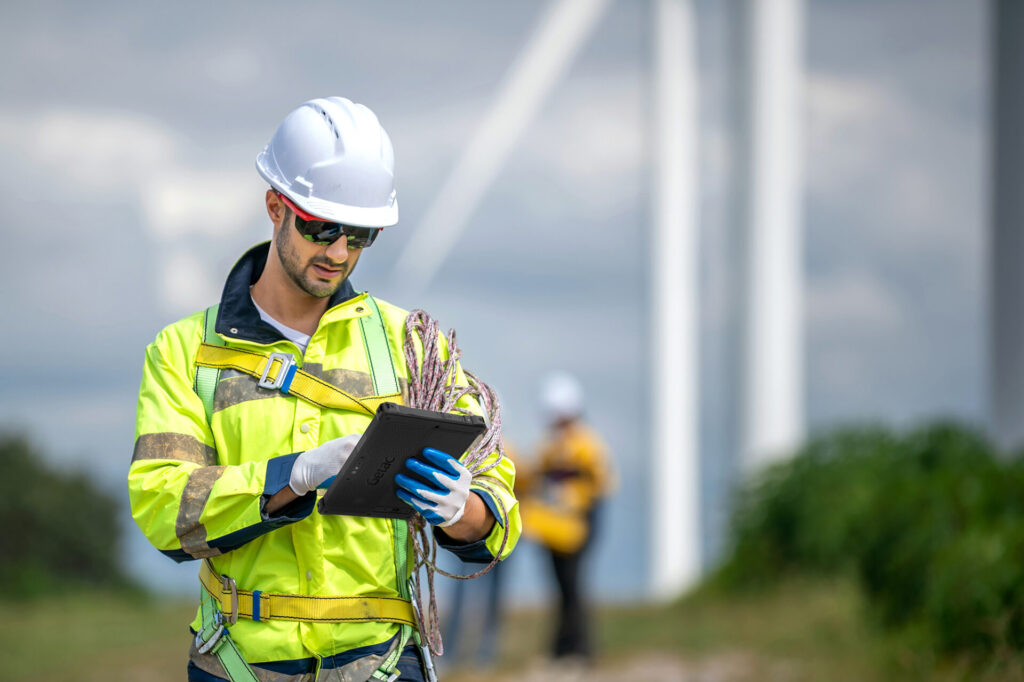
Male man engineer inspection by tablet gesture check control wind power machine out door wind energy factory. technician professional worker check wind power machine turbine field inspection
The use of digital devices in hazardous areas comes with its own unique set of challenges, particularly when there’s a risk of potentially explosive dust and gases being present. In these situations, devices with intrinsic safety features are critical to worker safety.
Intrinsic safety is a protection technique applied to electrical products that limits the energy available for ignition, making them safe to use in hazardous areas that contain potentially explosive atmospheres. This is achieved by restricting voltage, current, power, and thermal output to be below the minimum ignition energy of flammable gases/dusts.
Intrinsically safe devices are rated using international standards (ATEX, IECEx) that categorise them by zone. These ratings specify the hazardous environment where the device can be safely used. For ATEX and IECEx, the zone categorisations are as follows:
Zone 0 – Explosive gas atmosphere present continuously or for long periods of time.
Zone 1 – Probability of occasional occurrence during normal operation.
Zone 2 – It is unlikely to occur, and if it does, it will last for short periods of time .
Zone 20/21/22 – Equivalent zones for combustible dust hazards.
Devices rated 0/20 (gas/dust) offer the highest levels of intrinsic safety but often have to sacrifice functionality to achieve this rating, while tablets rated 2/22 offer lower levels of intrinsic safety but boast higher levels of functionality as a result. The most suitable device/rating for any given hazardous area is entirely dictated by the dangers faced.
Intrinsically safe tablets
Intrinsic safety relates to explosion risk, but there are other key features to look out for in an intrinsically safe tablet because workers will typically be using it for many different things over a long work shift. Considerations should include:
Advanced mobile connectivity: Intrinsically safe Wi-Fi access points are costly and many hazardous areas like oil refineries have more ground to cover than is viable for a typical Wi-Fi network. Another dangerous industry where Wi-Fi can be problematic is mining, with its irregular, obstructive, shape-changing landscape. In environments like these, private mobile networks can offer the range and comparable network capacity needed for advanced communications like mobile video streaming and augmented reality overlays, helping workers operate safely and efficiently.
Full work shift operation with powerful batteries: In an area where explosive dust and/or gases are a concern, you can’t just plug devices into a local wall socket when it runs low on power. In these scenarios, workers need devices with extensive battery life – preferably with the ability to swap out a drained battery without operational interruption (i.e., hot-swapping) – so they can stay in the field until the job is done.
Sunlight-readable screen: Direct sunlight can make it impossible to see a digital screen properly if it isn’t bright enough. For users that regularly operate in these conditions, it is recommended to have at least 800 nits of brightness to guarantee viewability out in the open on a bright sunny day.
Digital transformation offers a wealth of proven productivity gains, but many organisations remain wary of digitising operations in hazardous areas where pen and paper has traditionally been the norm. Intrinsically safe technology can help to overcome many of these concerns, optimising worker safety while simultaneously enabling wireless communication and data transmission in areas that were previously off limits to digital devices.




