Top 7 Business Fiber Internet Providers in 2026
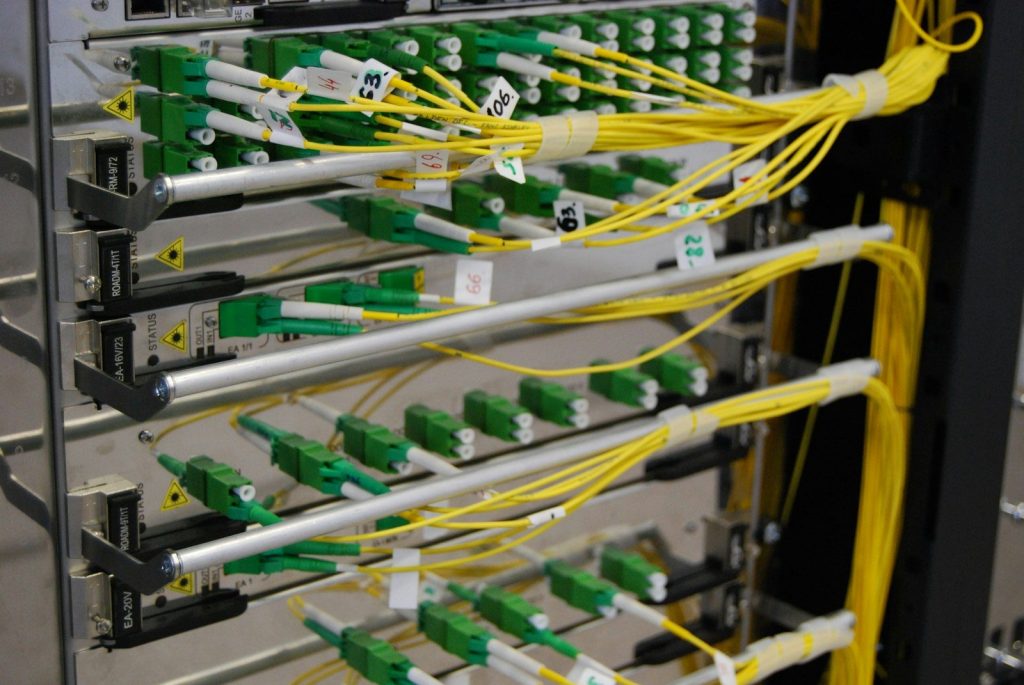
Full fibre now reaches around 82% of UK homes, according to Ofcom’s Connected Nations Spring 2026 update, up from 78% six months earlier. Yet many businesses still pick a connection on headline speed alone, and that’s the wrong yardstick. A fast line with a slow repair process costs more in lost hours than a slightly slower one that gets fixed by lunchtime.
The decision has a deadline attached. The UK’s PSTN switch-off is scheduled for 31 January 2027, and any business still running on analogue lines needs a migration plan well before then. This list ranks seven providers on coverage, service levels, support quality, multi-site management and room to scale. Prices move constantly, so treat any figure here as a rough guide and confirm it with a quote.
1. TailWind Voice and Data
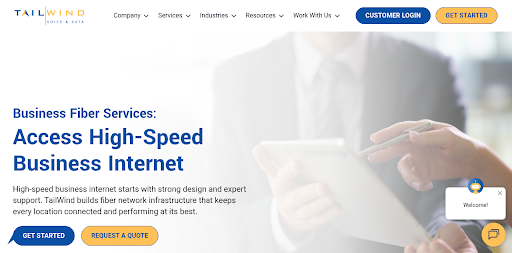
TailWind Voice and Data is a Minnetonka, Minnesota-based, carrier-neutral provider that coordinates dedicated fibre for businesses rather than owning the network itself. That makes it one of the best business fiber internet providers for companies rolling out connectivity across many locations in the United States, with symmetrical speeds from 100 Mbps to 10 Gbps depending on the site and carrier.
Its service covers site evaluation, carrier coordination, installation oversight and circuit testing, followed by monitoring and ticketing once a circuit is live. A single point of contact handles the lot, which matters when you’re opening your fifth US site and don’t want five separate carrier relationships. It supports private circuits and dedicated internet access, and can replace legacy circuits as well as activate new ones. Customers shown on its site include Hudson, TopBuild, Beacon, LifeStorage and RNDC.
One limitation to be plain about: TailWind’s footprint is American enterprise locations, and it doesn’t advertise UK coverage. For a UK-only office, look further down this list. For a British firm with branches or warehouses in the US, it’s a strong fit. Pricing and specific SLA terms aren’t published, so you’ll need the 30-minute intro call to get numbers.
2. BT Business
BT Business website
BT remains the default for UK firms that want the widest possible reach. Because Openreach infrastructure underpins so much of the country, BT can often supply a line where smaller rivals can’t, and its business range includes enhanced service-level options and static IP addresses.
You pay for that reach. BT’s entry pricing sits above the cheapest rivals; Broadband Picker’s 2026 guide puts full fibre from around GBP 25 a month for 80 Mbps. If your premises are in a patchy area or you need a well-staffed support operation, that premium is easy to justify. If you just need a basic line in a city centre, it isn’t.
3. Vodafone Business
Vodafone Business website
Vodafone is the value pick among the big names. Broadband Picker’s 2026 guide lists its business full fibre from roughly GBP 20 to GBP 22 a month excluding VAT on a 36-month term, with extras such as a static IP costing more.
That 36-month commitment is the catch. A long contract is fine for a stable head office and awkward for a company that might move premises in two years. Vodafone suits small and mid-sized firms that value a bundle of mobile and broadband from one supplier and are happy to sign for the long haul.
4. Virgin Media Business
Virgin Media Business website
Virgin runs its own network, which sets it apart from providers reselling Openreach lines. Broadband Picker reports average business speeds of around 442 Mbps, which is genuinely quick for the price.
Availability is the constraint. Virgin’s cable footprint covers roughly half of UK premises, so the first step is simply checking whether your postcode is served. Where it is, Virgin is worth a hard look as an alternative to the Openreach-based providers, particularly for offices with heavy upload and download demands.
5. Zen Internet
Zen Internet website
Zen has built its name on service rather than rock-bottom pricing. Which? has named it a Recommended Provider since 2021, and Broadband Picker cites an 84% customer satisfaction figure. Business plans start from around GBP 30 a month on an 18-month term, per the same guide.
The shorter term is a practical advantage for growing companies. Zen is a sensible choice for a small team that has been burned by an offshore call centre and wants UK-based support that picks up the phone.
6. Sky Business
Sky Business website
Sky targets the small end of the market: sole traders, shops, and offices of a handful of people. Its appeal is simplicity, with broadband that can sit alongside TV and phone products many owners already know.
It isn’t built for complexity. If you need a dedicated leased line, tight repair commitments or managed connectivity across several sites, you’ll outgrow it quickly. For a five-person studio that wants a dependable connection without a procurement exercise, it does the job.
7. Daisy Communications
Daisy Communications website
Daisy is aimed at organisations with more than one site and a need to tie voice and data together. Bundling connectivity with telephony under one contract and one account team simplifies life for IT managers who would otherwise juggle several suppliers.
That focus cuts both ways. Smaller businesses may find the proposition more than they need, and the quote process is closer to a procurement conversation than a click-and-buy checkout. For a regional firm with a dozen branches, though, it’s a natural shortlist entry.
How to Choose the Right Provider
Start with coverage, because it decides your options before price does. Ofcom’s Connected Nations 2025 report shows full fibre take-up and availability varying sharply by area, and the Spring 2026 data reported by ISPreview puts Northern Ireland at 95%, England and Wales at 82% and Scotland at 75%. Those are residential figures, so ask each provider to confirm business availability at your exact address.
Next, put service levels ahead of megabits. A dedicated line with a guaranteed repair time beats a faster shared connection for anything customer-facing. Check for symmetrical speeds, a static IP, installation lead times and what happens if the line drops on a Friday afternoon. Ofcom’s Connected Nations UK report is a useful baseline for what coverage and take-up look like nationally.
Contract length deserves equal scrutiny. As we explained in our guide on why full-fibre suits young companies, a scaling startup gains more from flexibility than from the lowest monthly price. Our earlier report on independent network operators also covers the smaller network builders that can undercut the big names where they’ve built, though that piece dates from 2022 and the market has moved on.
The regulatory backdrop is changing too. Ofcom’s Telecoms Access Review 2026-31 sets out how it intends to promote competition and investment in fibre networks, which should shape pricing and choice over the next few years. Finally, if you still have ISDN or analogue lines, start migrating now; the 31 January 2027 deadline leaves little room for slipped installs.
Conclusion
For a single UK office, pick on coverage and support quality, then negotiate the contract term. For a business spreading across several locations, a managed approach that coordinates carriers and gives you one contact is worth more than shaving a few pounds off each line. Get at least two quotes, ask for repair commitments in writing, and don’t leave the migration to the last month.




