Tesla Flew a Car. Britain Can’t Plug In a Data Centre.
Written by Ekaterina Bagantsova, researcher in AI and quantitative finance
Two stories emerged within four days of each other this month, and I can’t stop putting them side by side.
On 15 October Tesla livestreamed its new Roadster from a SpaceX test site in McGregor, Texas. The car drove up a curved ramp, adhered to it with fan-powered suction, then fired cold-gas thrusters developed with SpaceX and jumped off. According to Benzinga, Tesla’s shares were up about 4.4% the next morning, production is due to start in 2028, and reservations start at $50,000.
On 19 October Microsoft confirmed it had pulled out of leasing space at Nscale’s planned data centre in Loughton, Essex, a site Keir Starmer once called the UK’s largest sovereign AI data centre. Nscale has blamed the grid: according to UK media reports, the site won’t get power until the 2030s.
So one company can bolt rocket thrusters onto a sports car, and Britain can’t get power to a building on the edge of London. I find the second story far more interesting than the first.
Power is the bottleneck
What made the Roadster stunt possible is largely mundane: Musk’s companies share components and people freely. The thrusters came from SpaceX, the actuators from the Optimus robot, the steering from the Cybertruck. When one of them needs hardware or engineers, it takes them.
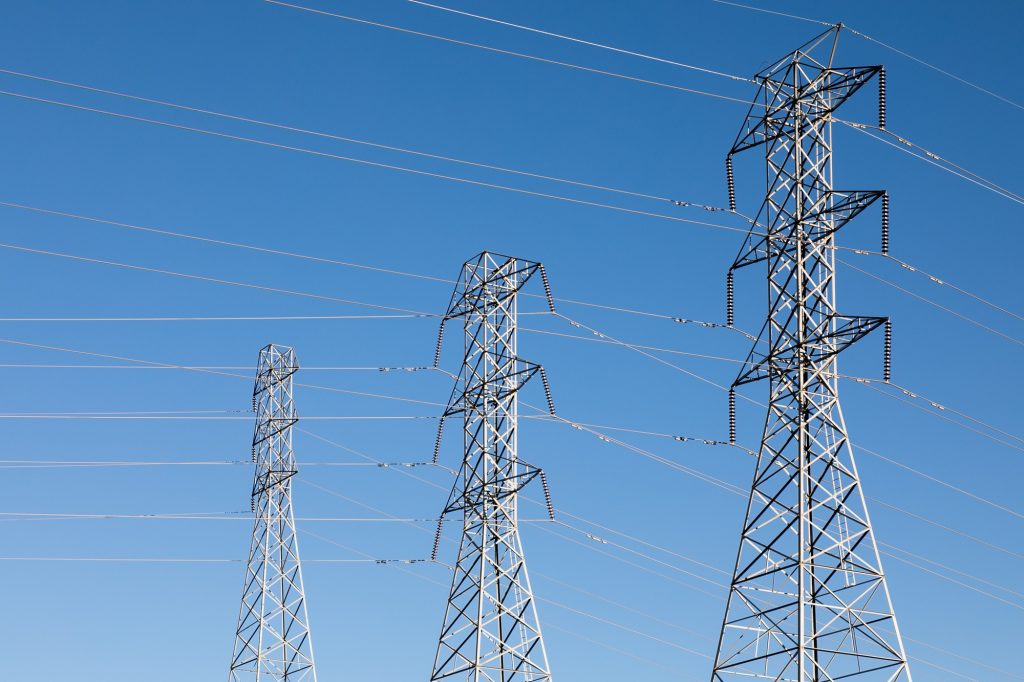
British AI builders have the opposite problem. Ofgem figures show the queue of demand waiting to connect to the grid grew from 41 GW in November 2024 to 125 GW by June 2025. The National Energy System Operator (NESO) has identified about 140 data centre projects in that queue, asking for roughly 50 GW between them. For comparison, Britain’s peak electricity demand this February was about 45 GW.
Charles Deacon, technical director of grid at Eclipse Power, estimated in Data Centre Review this month that a new application could take up to 15 years to get a connection. In the same piece he notes that the average transmission demand residual charge rose by around 64% between 2025/26 and 2026/27. British power is reliable. It’s also costly, and it takes forever to arrive.
Loughton isn’t a one-off, either. Earlier this year OpenAI pulled back from its Stargate UK partnership with Nscale and Nvidia, citing high energy costs and regulatory uncertainty.
This isn’t only a data centre problem
You could file all this under hyperscaler headaches and move on. I wouldn’t. Compute is now an everyday input for fintech fraud models, drug discovery and pretty much anything else with a model in it. In my own field, quantitative research, the compute you can get determines which ideas you can test at all.
When the capacity gets built somewhere else, the capital tends to follow. Nscale is preparing a New York Stock Exchange listing, not a London one, reportedly targeting a valuation of up to $35 billion. And according to a July report by Bidwells and Beauhurst, UK university spinouts raised £6.3 billion in growth-stage funding between January 2022 and May 2026, but only 8p of every pound came from rounds funded solely by UK investors.
The government is putting money in. On 15 October the British Business Bank committed £180 million to six AI and deeptech funds, and AI Growth Zones promise expedited planning and possibly cheaper network charges. That helps a startup get going. It does much less if the company then can’t get electricity to the servers it needs to grow.
Changes are needed
Policymakers should put grid capacity at the centre of AI strategy. Ofgem’s plan to clear speculative projects out of the queue is the right idea, but it has to happen faster, and AI Growth Zones should go where power can actually be delivered in the next few years.
Founders should ask about power as early as they ask about funding. Where does your cloud or colocation provider’s capacity actually sit, and when do its new sites go live? On-site generation, flexible connections and sites near new renewables are all worth exploring.
Investors need the grid in their due diligence. A signed lease on a building that won’t be energised until the 2030s is worth a lot less than it looks on paper. I’d take a smaller project with power already secured over an impressive site plan without it.
The less exciting story matters more
The Roadster may or may not reach customers in 2028, and the clip will accumulate millions of views either way. Nobody is going to share a video of a transformer being delivered on time. But that delivery decides whether the next big AI company grows here or somewhere with a shorter queue.
Image Source: Magnific
—
Ekaterina (Kate) Bagantsova is a quantitative researcher working at the intersection of finance and AI.




