Why Network Redundancy Is Becoming Essential for Always-On Businesses
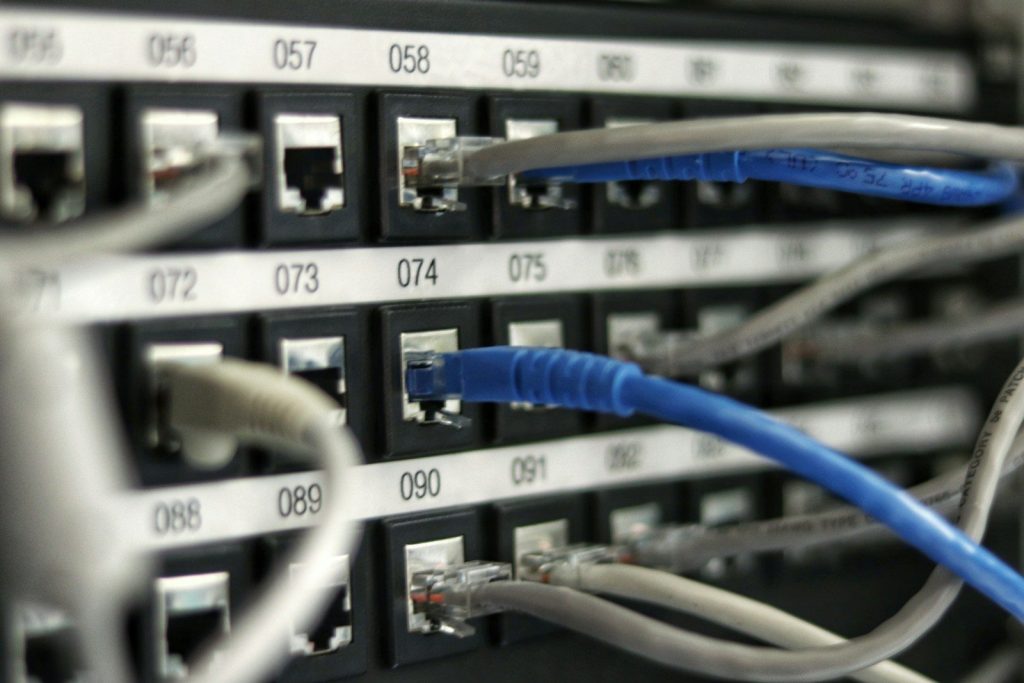
For many organisations, an internet connection has become as fundamental as electricity. Cloud applications, payment systems, voice services, customer portals, security platforms and internal communications can all depend on continuous network access. When that connection fails, the impact is often immediate and visible across the business.
This dependence has changed the way companies should think about connectivity. High bandwidth is important, but availability is equally critical. A fast primary connection does not protect a business if a cable cut, provider outage or local infrastructure problem leaves the site completely offline. That is why network redundancy is increasingly moving from a specialist IT consideration to a broader business continuity requirement.
A single connection creates a single point of failure
Many business locations still rely on one primary fixed line. In normal conditions this may work perfectly well, but the architecture has an obvious weakness: if that connection fails, every service that depends on it can be affected at once.
The cause does not need to be dramatic. Construction work can damage a fibre route, a local exchange can experience an outage, a provider can have a technical incident or customer premises equipment can fail. Even a short interruption can disrupt transactions, communications and access to cloud-based systems.
What a redundant connectivity strategy can include
Redundancy is not simply about purchasing a second line. The backup path should reduce the chance that the same incident affects both connections. The right design depends on the site, available infrastructure, critical applications and how much downtime the organisation can tolerate.
A second wired connection
A second fibre or broadband connection can add resilience, particularly when it is delivered through a separate provider or physical route. However, two services that share the same local duct, exchange or upstream infrastructure may still fail together. Businesses should therefore understand how independent the backup connection really is.
4G or 5G backup
Cellular connectivity offers a useful alternative because it can use different infrastructure from a fixed line. A 4G or 5G connection can remain on standby and take over when the primary service becomes unavailable. This is particularly useful for retail sites, offices, temporary locations and distributed businesses that need a backup option without installing another fixed circuit at every location.
Satellite for difficult or remote locations
Satellite can provide another independent path where fixed and cellular infrastructure is limited or where a business wants additional diversity. It can be especially relevant to remote sites, industrial operations or locations where terrestrial connectivity options are constrained.
Failover matters as much as the backup connection
A secondary connection provides limited protection if switching to it requires someone to notice the outage, reconfigure equipment and manually restore services. For always-on environments, the transition between primary and backup connectivity should be as automatic as possible.
Well-designed redundant internet connections can work with routers and network policies that detect a failure and redirect traffic to an available path. When the primary service returns, traffic can be moved back in a controlled way. This reduces the length of an outage and removes the need for staff at every location to troubleshoot connectivity manually.
Different locations require different levels of resilience
The business case for redundancy is not identical everywhere. A small administrative office may be able to tolerate a brief interruption, while a busy retail store, warehouse, security operation or production site may face immediate operational consequences when connectivity is lost.
This is why redundancy should be based on risk rather than applied as a fixed template. Organisations can classify sites according to the importance of their online systems, expected cost of downtime and available network options. Critical sites may justify multiple independent access technologies, while lower-risk locations may only require a simple cellular failover connection.
The value extends beyond the IT department
Network resilience is often discussed as a technical subject, but outages affect far more than routers and applications. They can interrupt revenue, delay employees, reduce customer service quality and create reputational problems.
Protecting business continuity
When core systems remain reachable during a provider outage, employees can continue working and customers are less likely to notice that a failure occurred. In distributed organisations, this is especially valuable because a central IT team may be responsible for dozens or hundreds of locations.
Supporting cloud-first operations
The move to cloud software has reduced the amount of infrastructure businesses need to host locally, but it has also increased dependence on external connectivity. Applications may be highly available in the cloud while still becoming unreachable from a site with no internet connection. Redundancy helps address that local access risk.
Plan for failure before it happens
No network can guarantee that an individual connection will never fail. A more realistic objective is to design the environment so that a single failure does not stop the business. That requires understanding the primary risks, choosing genuinely diverse backup options and testing how failover behaves before an incident occurs.
As organisations rely on a growing number of online services, resilience is becoming a basic part of connectivity planning. The strongest networks are not necessarily those with the fastest single connection, but those that can continue operating when one part of the infrastructure becomes unavailable.