SpaceX Starship Catch Fuels Hopes of Cheaper Space Launches as Experts Assess Reusability Breakthrough
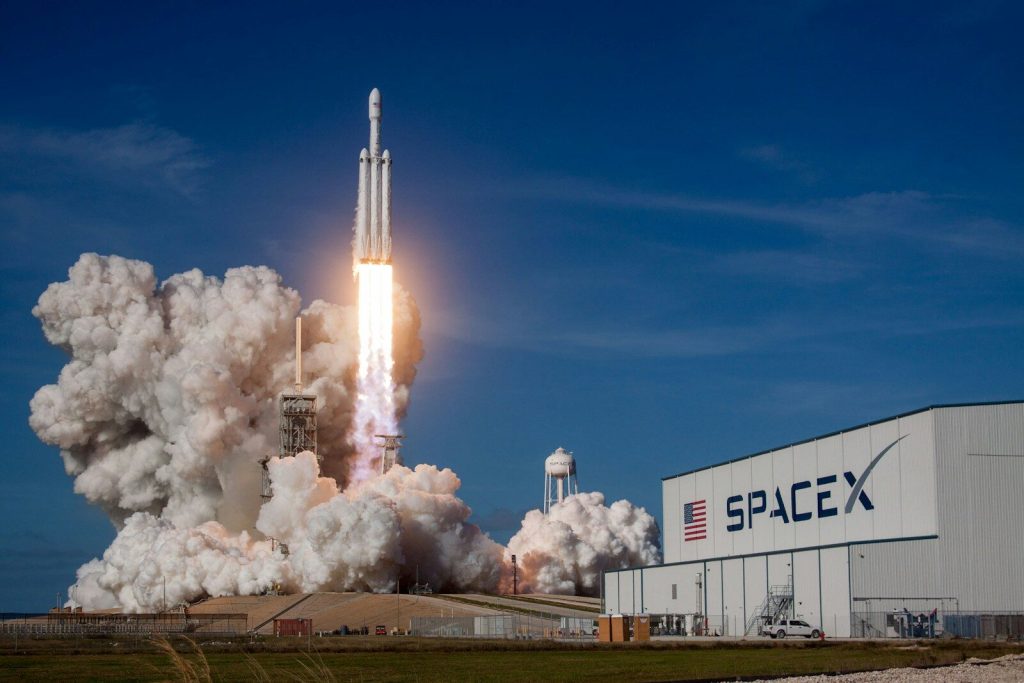
SpaceX’s reported successful midair recovery of a Starship upper stage using its giant Mechazilla launch tower has sparked widespread discussion about the future of space travel, with industry observers suggesting the technology could dramatically reduce launch costs and accelerate the development of commercial space infrastructure.
Analysis by technology intelligence company GlobalData has highlighted enthusiastic reactions across social media platform X, where aerospace specialists, investors and technology commentators have been discussing the potential implications of the achievement.
The reported recovery marks an important development in SpaceX’s ambition to create a fully reusable launch system, although significant engineering and operational challenges remain before the technology can deliver the dramatic cost reductions anticipated by its supporters.
Unlike conventional rockets, which often discard major components during launch, SpaceX’s Starship programme aims to recover and reuse both its Super Heavy booster and upper-stage spacecraft.
Achieving this consistently could fundamentally change the economics of placing satellites, scientific equipment and other infrastructure into orbit.
How SpaceX’s Mechazilla System Works
At the centre of the development is Mechazilla, SpaceX’s enormous launch tower at Starbase in Texas.
The structure incorporates two large mechanical arms, commonly referred to as ‘chopsticks’, designed to catch returning rocket components during their final descent.
Rather than requiring spacecraft to land on conventional landing legs, the system aims to capture them directly at the launch site, potentially reducing the weight of recovery equipment carried aboard the vehicle.
The approach is intended to simplify recovery and support faster preparation for subsequent missions.
SpaceX has already demonstrated the ability to catch its Super Heavy booster using the tower. The reported recovery of a Starship upper stage would represent another major technical milestone because of the different challenges involved in returning a spacecraft from orbital flight.
An upper stage must withstand extreme heating during atmospheric re-entry, maintain precise control throughout its descent and approach the recovery structure within tight operational tolerances.
According to the account examined by GlobalData, the Starship spacecraft returned to Starbase and was captured by the tower’s mechanical arms following its flight.
However, the Super Heavy booster was not recovered during the same mission, meaning the flight did not demonstrate the simultaneous recovery of both rocket stages.
This distinction is important because fully reusable operations depend on the successful recovery, inspection, refurbishment and relaunch of both components.
Could Starship Make Space Launches Significantly Cheaper?
The potential financial implications of reusable rocket technology are considerable.
Traditional launch systems have historically required substantial expenditure on hardware that may only be used once. Even when some components are recovered, extensive inspection and refurbishment can add costs and delay subsequent launches.
A system capable of repeatedly flying the same rocket stages could spread manufacturing costs across multiple missions.
If SpaceX can reduce the time and resources required between flights, it could potentially offer lower-cost access to orbit while increasing launch frequency.
This could benefit several areas of the space economy, including satellite communications, Earth observation, scientific research and future orbital manufacturing.
More affordable launches could also make it economically viable to deploy larger satellite constellations, replace ageing spacecraft more frequently and undertake projects that would otherwise be prohibitively expensive.
However, the scale of any savings remains uncertain.
Successful recovery is only one part of the equation. The cost of maintaining reusable hardware, replacing damaged components, operating ground infrastructure and meeting safety requirements will ultimately determine whether the system can achieve its commercial objectives.
GlobalData Highlights the Challenge of Repeatable Recovery
Smitarani Tripathy, Social Media Analyst at GlobalData, said:
“The successful catch represents an important step towards SpaceX’s ambition of developing a fully reusable launch system. Lower launch costs and more frequent flights could support larger satellite deployments and future space infrastructure. However, the next challenge will be demonstrating consistent recovery and refurbishment of both stages while reducing turnaround times. The achievement brings that ambition closer, but operational reusability will depend on repeatable execution.”
GlobalData’s analysis of reactions on X suggests that the achievement has generated considerable optimism among technology commentators.
Nevertheless, the distinction between an individual engineering success and a commercially viable, regularly reusable launch system remains central to the discussion.
A single successful recovery demonstrates that an approach may be technically achievable. Establishing a reliable service requires repeated successes under operational conditions, together with evidence that recovered vehicles can be prepared economically for subsequent flights.
Technology Leaders React to Starship Achievement
Among those responding to the development was Walter Isaacson, Professor of History at Tulane University, who reflected on the origins of the Mechazilla concept.
“This is actually a bigger deal for humanity than most people can imagine. I will always remember the looks on the engineers’ faces in the Starbase conference room in December 2020 when @elonmusk suggested, then insisted, that the Mechazilla launchpad arms could catch a returning Starship.”
Technology content creator Sawyer Merritt also celebrated the reported recovery:
“They did it! SpaceX has just caught their Starship rocket for the first time ever, marking the first recovery of a conventional orbital rocket upper stage in history! This is one of the greatest engineering achievements in history. Congrats to the entire @SpaceX team!”
Independent technology analyst Harold Sinnott highlighted the spacecraft’s time in orbit before its return:
“History made at Starbase! After 14 laps around Earth and 22.5 hours in space, @SpaceX just caught an orbital Starship upper stage in midair using Mechazilla’s giant robotic arms. Full, rapid reusability just took a massive leap forward. 🔥👏👏 #SpaceX #Starship #Flight15…”
Dan Tsubouchi, President at Tsubouchi GM&P Corporation, acknowledged the achievement while pointing out that the booster had not been recovered:
“Elon fan or not, got to be impressed by the successful catch of @SpaceX Starship for the 1st time. They weren’t able to catch the booster as planned.If you haven’t seen..”
Investors Focus on the Economics of Reusable Rockets
For investors and commercial space companies, the most significant implications may lie in the distinction between full reusability and rapid reusability.
Recovering a spacecraft allows expensive hardware to be used again, potentially lowering the cost of each mission.
Reducing the time between flights could provide an additional benefit by allowing the same vehicle to carry more payloads over its operational lifetime.
Shaun Maguire, Partner at venture capital firm Sequoia Capital, drew attention to this distinction:
“The mad lads did it! Starship has been caught All the pieces are now in place Line of sight to a fully reusable rocket Being “rapidly” reusable will take more time But full reusability is what drives unit economics; rapid is what drives total mass to orbit Unreal! Congrats @SpaceX team!.”
The comments reflect growing interest in the potential for reusable launch systems to support a more commercially sustainable space industry.
For satellite operators, lower launch costs could improve the financial viability of new services, while more frequent launch opportunities could provide greater flexibility in deploying and maintaining orbital networks.
Cybersecurity researcher Md Ismail Šojaln also welcomed the milestone:
“This was the first time a Starship upper stage returning from orbit was caught by the launch tower a major step toward full rapid reusability of both stages. @elonmusk crazy done”
What Comes Next for SpaceX and Starship?
The next major challenge for SpaceX will be demonstrating that successful recoveries can be repeated consistently, with both the Super Heavy booster and Starship upper stage returned safely and prepared for further missions.
This will require progress in several areas, including thermal protection, flight control, structural durability, ground handling and refurbishment.
SpaceX will also need to establish whether the additional complexity of tower-based recovery produces meaningful operational savings compared with alternative approaches.
For the wider aerospace industry, the implications could extend beyond launch prices.
More frequent access to orbit could support the expansion of satellite broadband networks, improve the economics of commercial space stations and make ambitious scientific missions more achievable.
It could also intensify competition among launch providers, potentially encouraging further investment in reusable rocket technology.
However, the environmental impact of increased launch activity, including atmospheric emissions and the effects of growing satellite constellations, will remain important considerations as the industry expands.
The enthusiasm captured by GlobalData demonstrates the significance that technology observers attach to the reported milestone.
Whether it ultimately transforms the economics of space travel will depend less on the spectacle of an individual recovery and more on SpaceX’s ability to turn the technology into a reliable, repeatable and commercially sustainable launch system.
Sources/References
The following are direct, non-tracking URLs:
-
GlobalData: https://www.globaldata.com/
-
GlobalData Social Media Analytics Platform: https://www.globaldata.com/product/signals-globaldata-social-media-database/
-
SpaceX: https://www.spacex.com/
-
SpaceX on X: https://x.com/SpaceX
-
Elon Musk on X: https://x.com/elonmusk




