FastNetMon Launches Netomics To Keep Internet Routing Data In-House
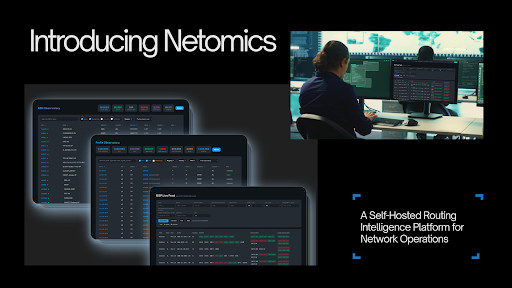
A London-based network technology company is betting that operators want to own the intelligence behind internet routing rather than rent it from outside services. FastNetMon, known for its DDoS detection and network-visibility tools, has launched Netomics, a self-hosted platform that pulls the scattered data operators use to understand internet routing into a single system that runs entirely on their own infrastructure.
The launch lands at a moment when routing has moved from a specialist concern to a boardroom risk, and when the cost of getting it wrong is climbing.
The problem being solved
The internet’s routing layer runs on Border Gateway Protocol, the system networks use to tell each other how to reach different parts of the internet. It works on trust, and that trust has repeatedly been abused. In a well-known 2008 incident, a single operator’s announcement for YouTube’s address space spread worldwide and took the service offline for around two hours. More recently, attackers have used routing manipulation to redirect traffic and steal from users.
The scale of what has to be watched keeps growing. The global routing table has passed 1.06 million IPv4 route entries, and the financial stakes have grown with it. In the Uptime Institute’s 2024 outage survey, 54 percent of operators said their most recent major outage cost more than 100,000 dollars, with one in five reporting a cost above a million.
The tools to investigate routing problems exist, but they are fragmented. To work out whether a routing event is legitimate, an engineer typically consults several separate public services and stitches the answers together by hand, exactly when time is shortest.
What Netomics offers
Netomics aims to remove that fragmentation. The platform ingests live routing feeds directly from routers and combines them with historical routing data, address ownership records, registry information and RPKI validation into a single model that operators can query.
The defining choice is that it is self-hosted. Rather than a public lookup service, it runs inside the customer’s own infrastructure, which the company says removes external rate limits, keeps routing data inside the network, and ends any reliance on a third party’s uptime. The platform also exposes nearly all functionality through REST APIs, Prometheus metrics and MCP, which lets AI assistants query live routing data within a controlled environment.
“Internet routing has become critical operational infrastructure, yet many organisations still depend on multiple external services to understand what is happening in their own networks,” said Pavel Odintsov, Founder of FastNetMon. “We built Netomics to give operators complete ownership of their routing intelligence while making it easier to troubleshoot incidents, automate workflows and improve routing security.”
The platform is aimed at internet service providers, cloud providers, internet exchange points and large enterprises, the organisations for which routing is core infrastructure rather than an occasional lookup. The company set out the full technical detail in its Netomics by FastNetMon launch materials and an accompanying full announcement.
Why the timing makes sense
Netomics arrives against a clear industry backdrop. Routing security has improved markedly in recent years, led by wider adoption of RPKI, the system that lets networks cryptographically validate who may announce a given address block. Most large carriers now reject announcements that fail that check. But validation only stops known-bad routes at the border. It does not, on its own, give an operator a fast, contextual view of what is happening across their routing in real time, which is the gap Netomics is positioned to fill.
There is also a UK and European dimension. As regulators and large enterprises pay closer attention to operational resilience and data sovereignty, the argument for keeping sensitive infrastructure data inside your own systems, rather than routing it through external services, becomes easier to make. A self-hosted model fits that direction of travel.
FastNetMon is not a newcomer to this space. The company built its reputation on open-source and commercial tools for detecting distributed denial-of-service attacks, a problem closely tied to how traffic is routed. Netomics extends that heritage from spotting attacks toward understanding the routing layer itself. It also reflects a wider pattern among infrastructure vendors, who are increasingly packaging capabilities that operators once assembled from a mix of free public tools and in-house scripts into single products that customers can run themselves.
The competitive question is whether operators see enough value in consolidation to adopt a dedicated platform, when many have long made do with a patchwork of free services. FastNetMon’s answer is that the patchwork stops working once routing data becomes something a team queries constantly and needs to trust during an incident. At that point, the argument goes, the scattered approach costs more in lost time than a unified platform costs to run.
The bigger picture
For years, network teams focused on collecting more data. The harder challenge now is turning that data into answers quickly enough to act on, and doing so without depending on services outside their control. FastNetMon is wagering that ownership is the answer, and that operators would rather run routing intelligence themselves than assemble it from a patchwork of external tools every time something breaks.
Whether the wider market agrees will play out over the coming year. What is clear is that routing has become too important to watch through someone else’s window. Netomics is one answer to that shift, and it reflects a broader move among operators to treat routing intelligence as core infrastructure worth owning outright.
Its position in that debate is blunt. Own the data. For a company that has spent years helping operators see attacks against their networks, extending the same principle to the routing those networks depend on is a logical next step, and a bet that the market is ready to think about routing the way it already thinks about security.
Netomics is available now for deployment within customer infrastructure, with selected features open to explore publicly on the company’s site.
About FastNetMon
FastNetMon develops DDoS detection and network-visibility solutions used by internet service providers, hosting companies, cloud providers and enterprises worldwide. The company, headquartered in London, helps network operators improve visibility, automate operations and protect critical infrastructure.
Meta
- Meta title: London’s FastNetMon launches Netomics, a self-hosted routing platform
- Meta description: FastNetMon has launched Netomics, a self-hosted BGP routing intelligence platform that keeps routing data inside operators’ own infrastructure, as outage costs climb.
- Suggested byline: Contributor / staff (assign the posting account name; uktechnews uses named contributor bylines).